





If you’ve ever struggled with spotty 5G signal indoors—whether in an office, a rural home, or a basement—you know how frustrating it is to deal with dropped calls, slow data, or no connection at all. After 14 years working in the cell signal booster industry, I’ve seen one mistake trip up way too many people: grabbing a 5G booster without checking if it matches the frequency bands your European carrier uses. It’s like buying a key that doesn’t fit your lock—no matter how good the key is, it won’t work. Let’s break this down simply, with no jargon, so you can pick the right booster the first time.

First, let’s talk about why frequency bands matter so much here. Europe doesn’t use the same 5G bands as North America or Asia, and even within Europe, different countries and carriers lean on specific ranges. 5G signals are split into three main types: low-band (sub-1 GHz), mid-band (1–6 GHz, the most common for European 5G), and high-band (mmWave, 24 GHz+). Low-band travels far and penetrates walls well but is slower. Mid-band balances speed and coverage—it’s Europe’s go-to for 5G. High-band is blazing fast but barely goes through walls and only works in dense cities.

Let’s get specific about the bands you’ll actually see in Europe in 2026. The big one across almost every EU country is n78 (3.4–3.8 GHz)—this is the backbone of European 5G, used by carriers like Vodafone, Deutsche Telekom, Orange, and EE. You’ll also spot n77 (3.7–4.2 GHz) in places like the UK, Spain, and Germany, which overlaps with n78 and is often bundled into the same booster support. For wide-area coverage—think rural villages or suburban neighborhoods—n28 (700 MHz) is everywhere; it’s slow but reliable, and many 5G boosters support it alongside mid-band options. A few countries, like Italy and France, also use n1 (2.1 GHz) for 5G, which overlaps with old 4G bands, so some multi-band boosters cover that too.
Now, here’s the part most people skip: check your local carrier’s exact bands before buying a booster.(Click here) I’ve had customers come to me with expensive 5G boosters that only support n77, but their area only has n78—total waste of money. It’s easy to avoid this with two quick steps. First, use a free app like CellularZ (Android) or your iPhone’s Field Test Mode to see which frequency your phone is connecting to right outside your home or office. Second, look up your carrier’s 5G band map for your specific location—most European carriers (Vodafone, Orange, EE, etc.) have these on their websites, updated monthly. For example, if you’re in Berlin with Deutsche Telekom, you’ll see n78 and n28 listed; if you’re in London with Three, it’s n78 and n77.
Let’s clear up a common confusion: 4G boosters vs. 5G compatibility. A lot of people ask if their old 4G booster will work for 5G. The short answer: only if it supports overlapping bands like n28 (700 MHz) or n1 (2.1 GHz). But it won’t boost mid-band 5G (n77/n78)—the fast 5G most people want. If you need reliable 5G speed indoors, you’ll need a booster explicitly built for European 5G mid-band bands. No way around it.
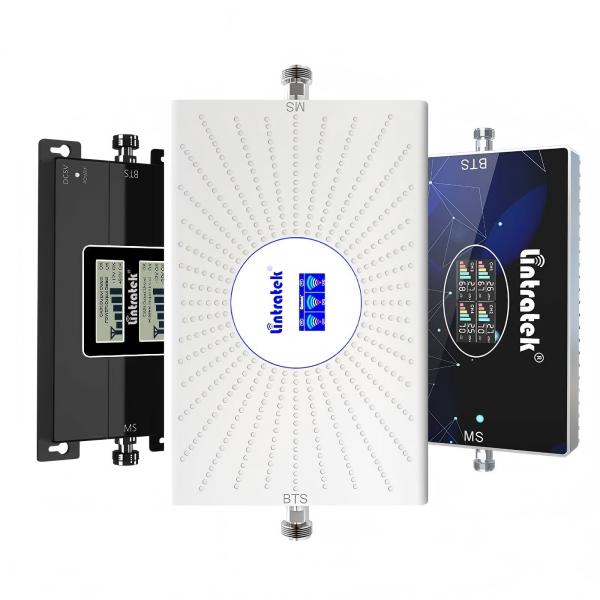
So, how do you pick a booster that matches your bands? Stick to these simple rules. If your area uses n78 only (most of Europe), get a single-band booster for 3.4–3.8 GHz—it’s affordable and effective. If you’re in a country with n77 + n78 (UK, Spain, Germany), choose a dual-band booster that covers both ranges. If you’re in a rural spot with n28 + n78, grab a tri-band booster that includes 700 MHz for coverage and 3.5 GHz for speed. Avoid “universal” boosters that claim to support every band—they’re often low-quality and cause interference, which kills your signal instead of boosting it.
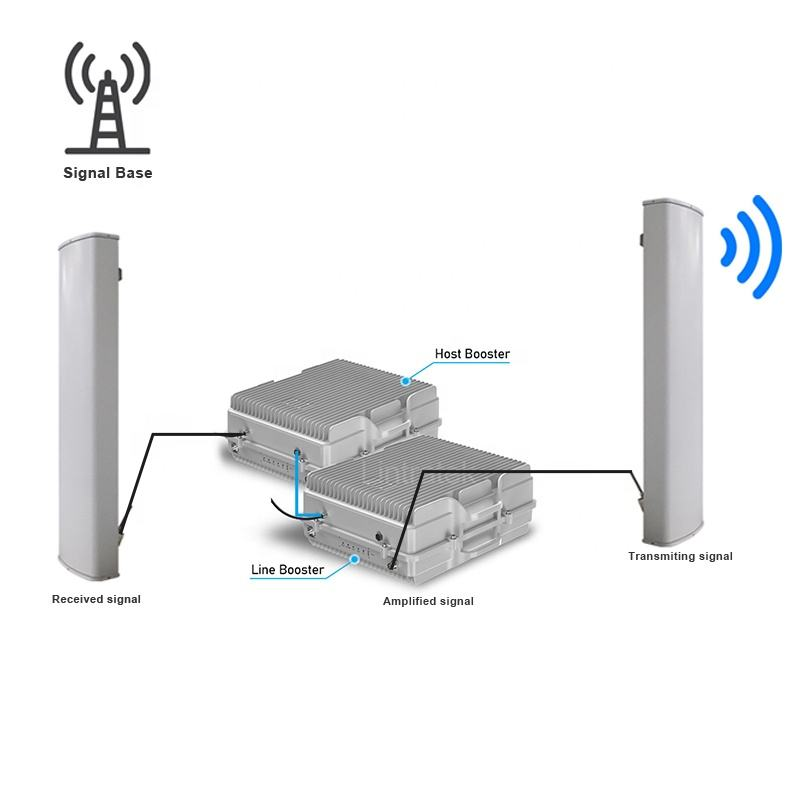

One last thing to keep in mind for 2026: Europe is gradually rolling out the 6 GHz band (6.425–7.125 MHz) for 5G-A and future 6G, but this is still in early trials and won’t be widely available until late 2026 or 2027. For now, focus on n77, n78, and n28—these are the bands you’ll actually use day-to-day. No need to overspend on 6 GHz-ready boosters yet unless you’re in a major city testing the new network.(To learn about the latest 5G signal amplifier, please click here)
At the end of the day, matching frequency bands isn’t rocket science—it’s just doing a little homework before you buy. After 14 years in this industry, I promise: 90% of 5G signal issues in Europe are fixed by pairing the right booster with your carrier’s exact bands. You don’t need fancy tech or a huge budget—just a little attention to detail.
If you’re still unsure which bands your area uses or which booster fits your needs, feel free to reach out. We can walk through your carrier’s coverage map together and find a simple, reliable solution that works for your space.
Post time: Apr-15-2026