





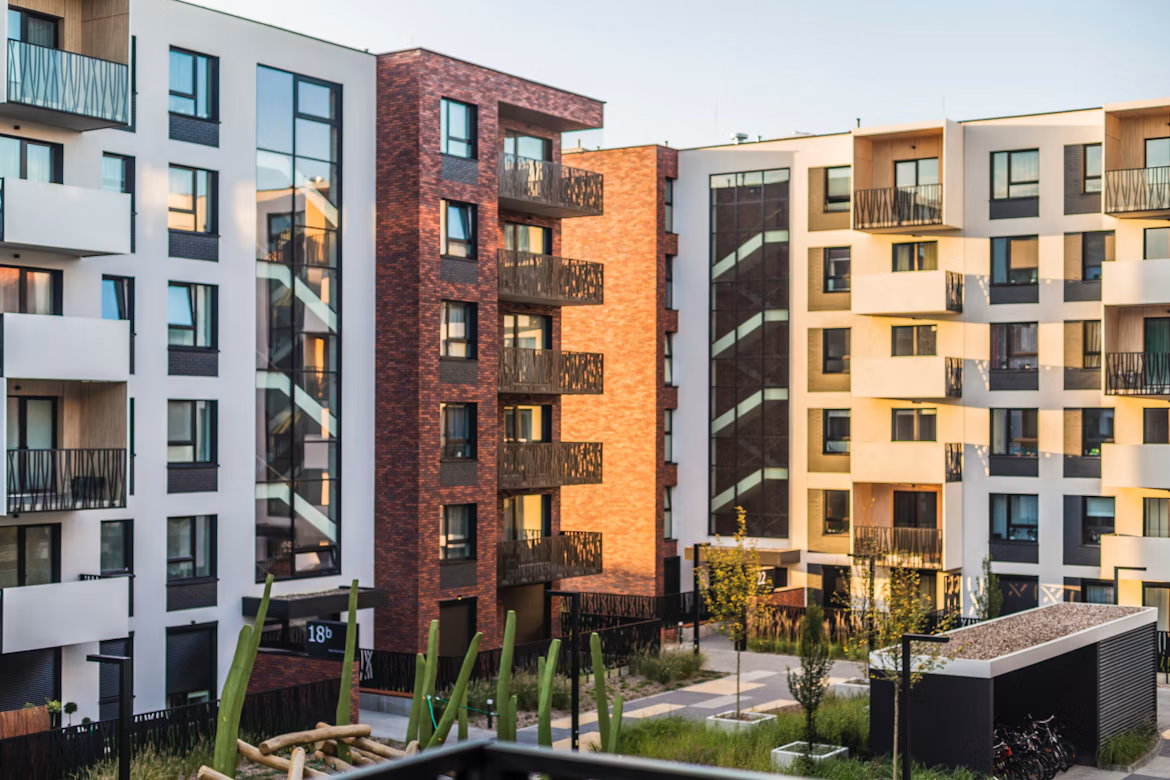
Recently we walked through an apartment building for a signal coverage survey. Equipment and plan were all ready. Then we got stuck on something completely unexpected — the cabling just could not run through.
The building had just finished its renovation at the end of September. Recessed lighting without downlight panels sealed the ceiling tight. Wall tiles and wooden doors were all in place. It looked like a standard handover-ready unit. But that “standard” was exactly what made signal installation much harder than it needed to be.
One Installation Blocked by Four Walls
We went over the site and found almost every cable path sealed off.
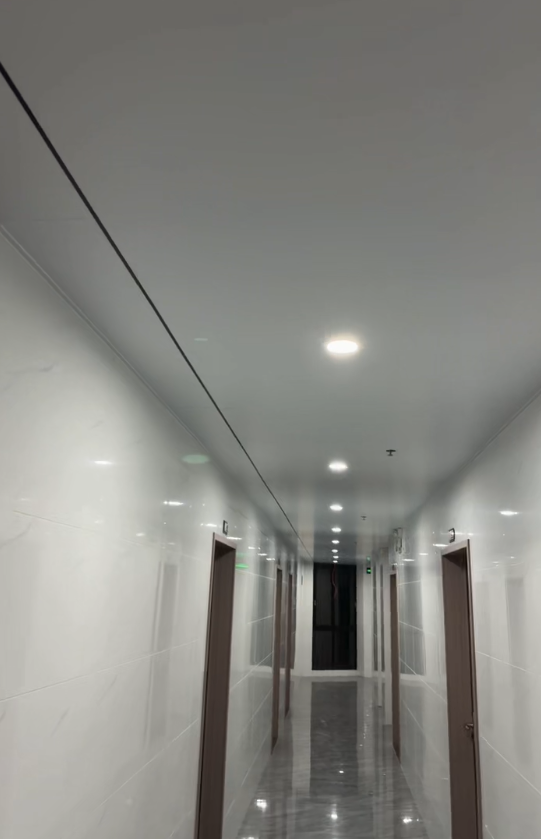
Want to route through the ceiling? It was fully sealed with no access hatch, and the owner refused to open one. Try pulling cable through a spot light? That was the only opening, but even with the light removed the line still could not pass. Need to cross to the second floor? A structural beam sat right above — drilling through it touches the building structure, a red line nobody should cross. Use a conduit then? That would ruin the looks.
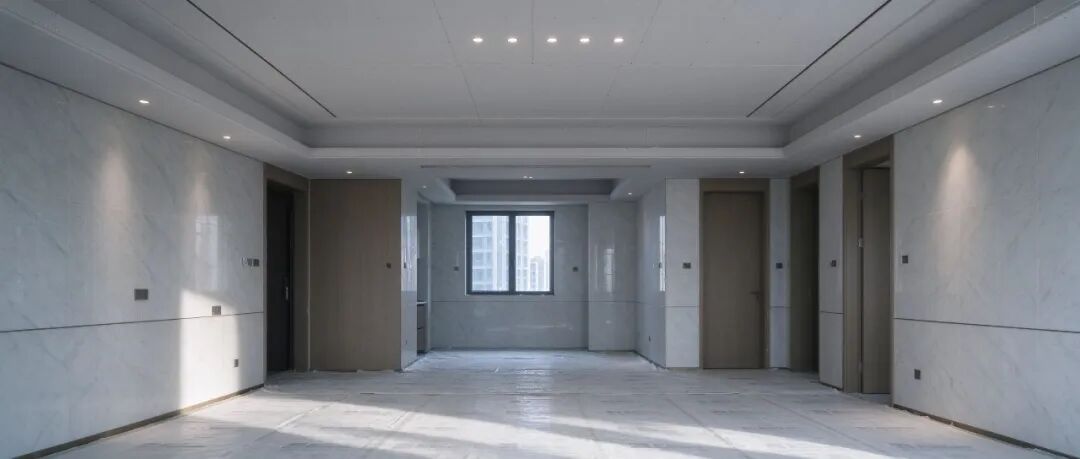
We tried every option, one after another. None worked.
The client was direct: “You can’t have your people drill through the beam.”
We fully understood. Nobody wants to damage a freshly renovated building just to install a signal amplifier.
But this is exactly the problem — when this building was designed and decorated, not a single person stopped to think, “The phone signal here might be weak.”
Why Medium-Sized Buildings Almost Always Have Dead Zones?
Mobile signal travels as radio waves, and reinforced concrete walls and floors are the hardest walls for it to get through. Every wall the signal crosses weakens it by one notch. After two or three walls, calls often become hard to hear and pages barely load. That is physics, and it has nothing to do with the carrier or the phone brand.
Apartments, offices, hotels and dormitories — medium-sized buildings like these are the easiest to trap weak signals inside. The problem spots tend to overlap: deep inside corridors flanked by load-bearing walls; elevator halls and cabins, where the metal shell itself is a shield; underground parking floors buried under concrete; and inner rooms and bathrooms carved out of large open spaces.
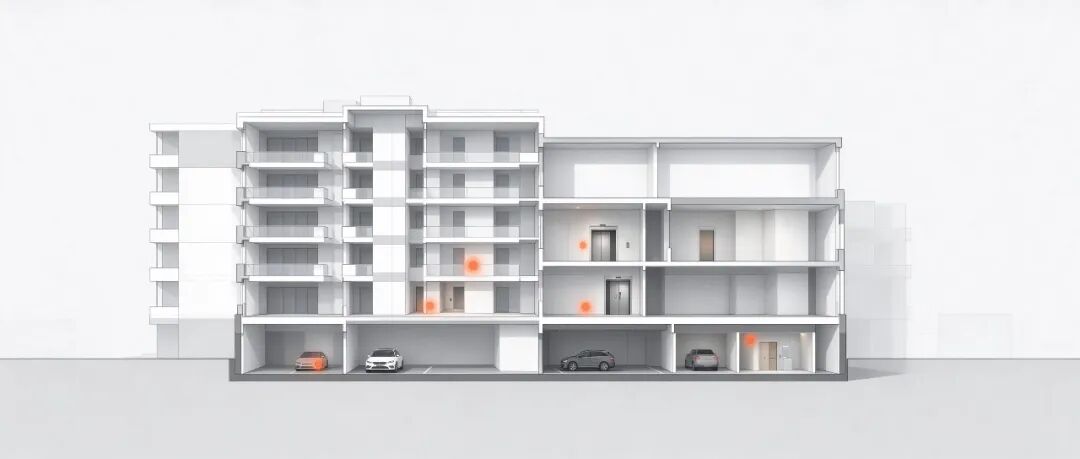
In all these places, no matter how many outdoor base stations there are, the signal has to pass wall after wall and bend around corners. By the time it reaches these corners, there is usually little left.
So indoor signal coverage for this kind of building was never a question of whether to do it, but when — calmly during construction, or painfully after people have moved in.
Three Points to Note When You Retrofit Later
Fixing it after the fact usually means fighting through three challenges, and each one gets harder: routing, aesthetics, and cost.
1. Routing is hard. The ceiling is sealed, no cable tray was reserved, and load-bearing beams can’t be touched. The cable is only a few meters short of its target, yet there is simply no way to get it there.
2. Aesthetics suffer. Surface-mounted conduits and exposed wiring drag down even the finest decoration.
3. Cost climbs. Second visits, partial demolition, rework coordination — you pay a second time for the same job.
Just like that apartment building. It wasn’t that coverage couldn’t be done. It was that doing it later would seriously hurt how the place looked.

Avoid These Three Traps Before Construction Starts
If your apartment, hotel or office project is still on the drawing board or in the decoration phase, confirm these three things in advance.
Trap one: “Signal coverage” has no line on the blueprint.
Mobile signal coverage should be written into the design and budget, just like water, electricity and internet. It should not be treated as an “auxiliary job” remembered only after renovation is done.
Trap two: No passage was reserved for the cable.
From the equipment room to elevator halls, corridors, lobbies and parking garages, reserve weak-current cable trays and conduits in advance. When the cable has a path, signal equipment can be installed without breaking through a single wall.
Trap three: No engineer was brought in before the ceiling panels went up.
Leave an access hatch, and let a signal coverage engineer survey the site once before the panels are sealed. It takes tens of minutes and saves you from tearing open the ceiling later.
You can redo a renovation. A drilled beam cannot be repaired. When it comes to signal coverage, it’s better to leave room for it early.
t Lintratek, we never force a one-size-fits-all plan onto every site.
Every site is different — how the ceiling is sealed, where the beams sit, whether feeder lines were reserved. Only by walking the site inch by inch do you know how the cable can run. That is why we always survey first, then design a custom cellular signal booster system, and only then start installation. We go to the site first and map every possible cable route without touching a single load-bearing beam. Then we design a tailored mobile network solution so the equipment hides where it should, keeping your renovation intact. Finally, we install — making signal coverage something you never have to worry about from the drawing stage onward.

Whether you are an RF contractor planning a project, a system integrator sizing equipment for a client, or a distributor looking for a reliable partner, if your building is still in the design or decoration phase, now is the time to think about indoor coverage. Reach out to our team and we can help you plan the right mobile signal repeater setup before the walls close up.

Post time: Oct-25-2026