





You’ve got a building with bad signal. Your client wants it fixed. You need to spec the right equipment.
Where do you even start?
Most people jump straight to picking a repeater model. That’s actually the last step. The right approach works backwards — measure what you’ve got, understand what’s blocking it, calculate what you need, then match a unit to those numbers.
This guide walks through that process step by step. No sales pitches. Just the decision tree our engineers use on every project.
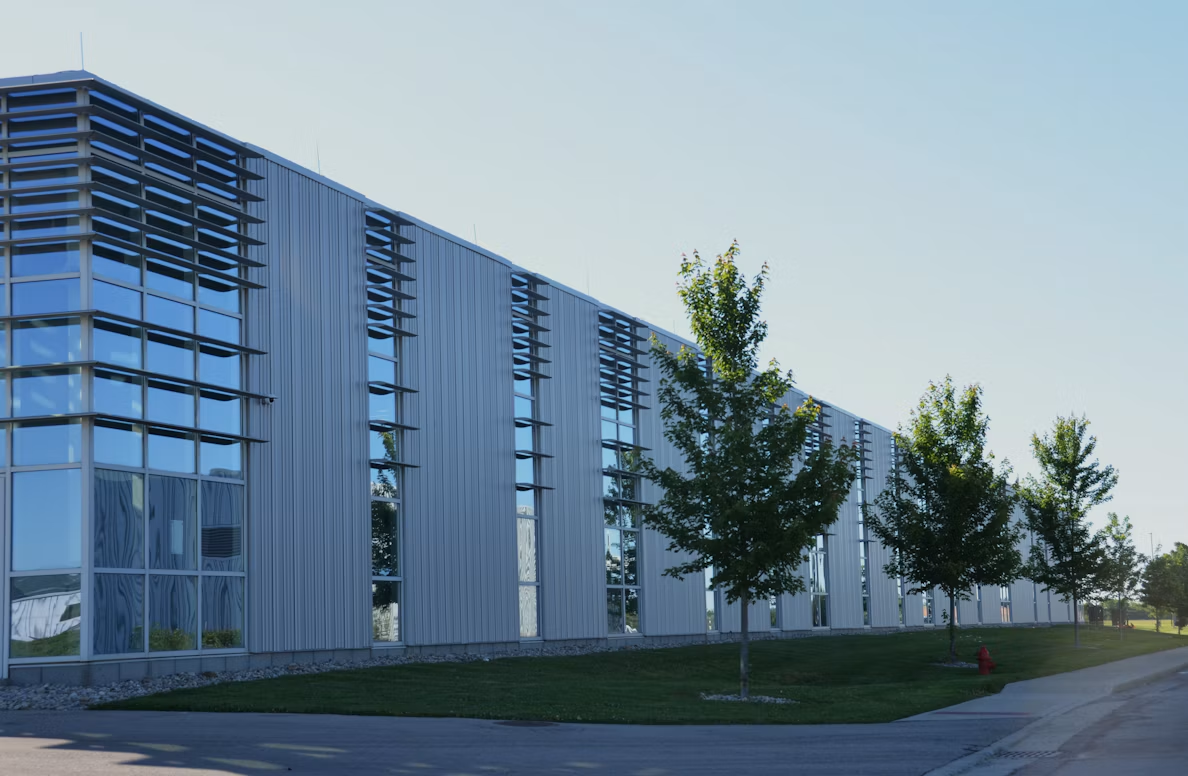
mobile signal repeater for Commercial Building
Step 1: Measure Your Signal source First
Before anything else, you need to know what signal is available outside the building. This is called the donor signal — the raw signal coming from the nearest carrier tower that your system will capture and amplify.
Grab a phone with engineering mode enabled (dial *3001#12345#* on iOS, or use the Cellular-Z app on Android).
Walk around the building exterior and note the RSRP (Reference Signal Received Power) values.
Here’s what those numbers tell you:
- Above -85 dBm: Strong donor signal. Almost any repeater will work well. You’ve got plenty to amplify.
- -85 to -100 dBm: Moderate. Usable, but you need a unit with higher gain to compensate.
- Below -100 dBm: Weak. You’ll need a high-gain directional donor antenna aimed precisely at the tower, and possibly a power signal booster with higher output power.
- Below -110 dBm: Very weak. Standard RF repeaters may not deliver usable indoor signal. Consider a fiber optic repeater system — Lintratek’s long-distance transmission solutions use fiber cable to carry signal from a tower-side donor unit to a remote booster up to 10km away.
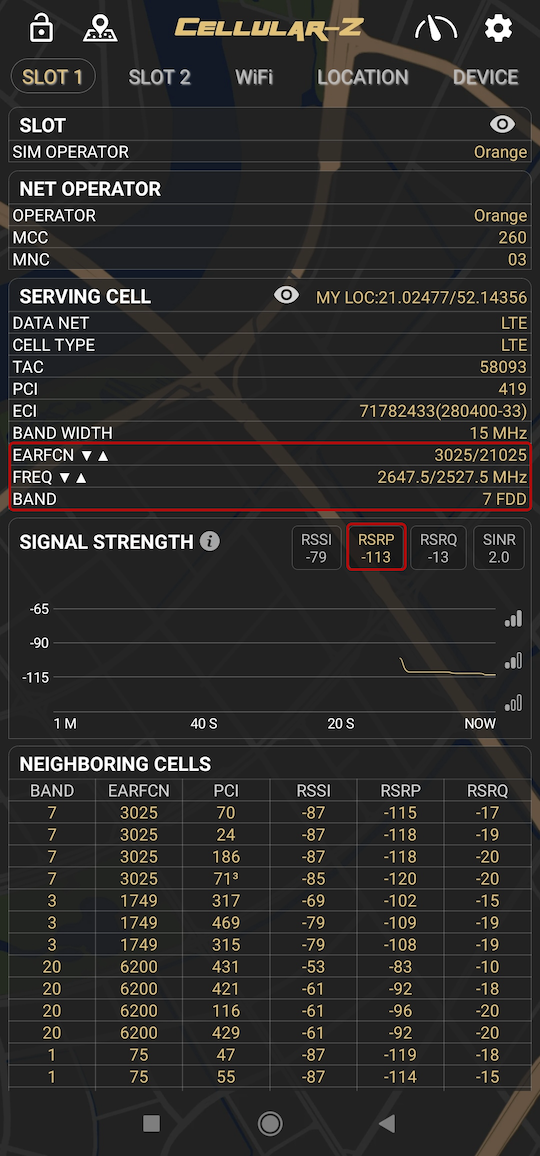
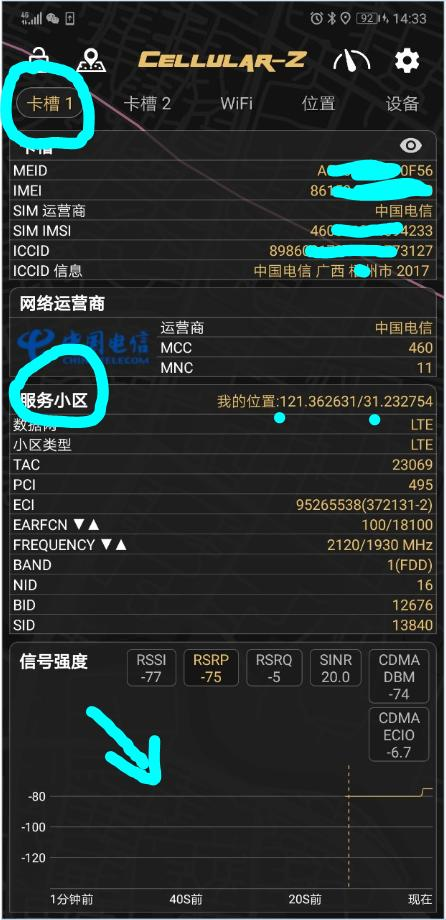
Don’t guess this number. Don’t rely on the bars on your phone — they’re not standardized across devices. Use actual dBm readings.
Step 2: Assess the Building Materials
Once you know what signal is outside, figure out what’s eating it before it gets inside.
Common commercial building materials and their approximate signal attenuation:
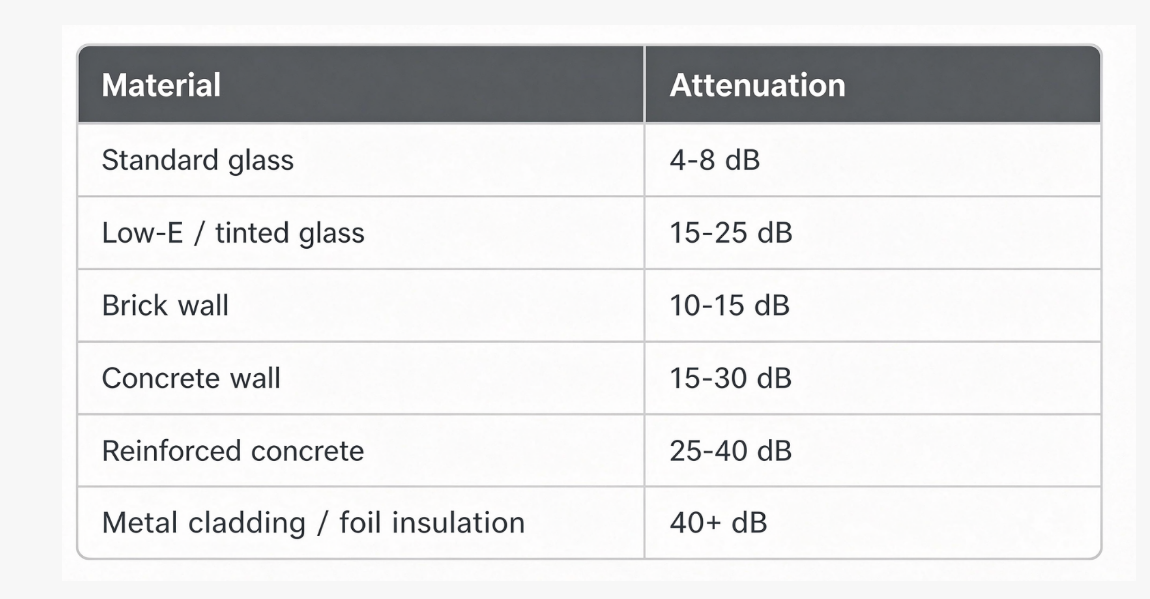
This matters more than most people think. A building with Low-E windows and reinforced concrete walls might have -70 dBm outside and -110 dBm inside. That’s the difference between “fine” and “dead.”
If the attenuation is extreme — say, a warehouse with steel walls or an underground parking structure — you’re not just boosting weak signal. You’re pushing signal through material that actively blocks it. In those cases, the number of indoor antennas and their placement matters as much as the repeater itself.
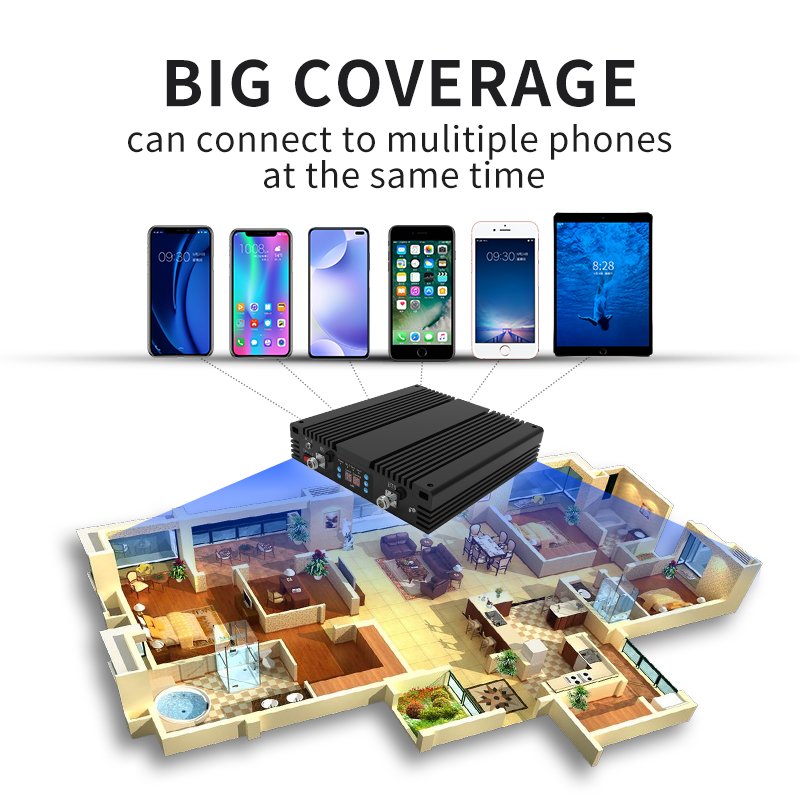
This is also where the line between a simple mobile network booster for office use and a full cellular signal booster system becomes clear. Small offices with moderate attenuation might need one host and two indoor antennas. Large commercial buildings with heavy materials need multiple hosts, splitters, couplers, and a designed antenna distribution network.
Step 3: Calculate Your Coverage Area
Now you know your donor signal strength and your building’s signal loss. Next: how much space do you need to cover?
This isn’t just square meters. Coverage depends on layout.
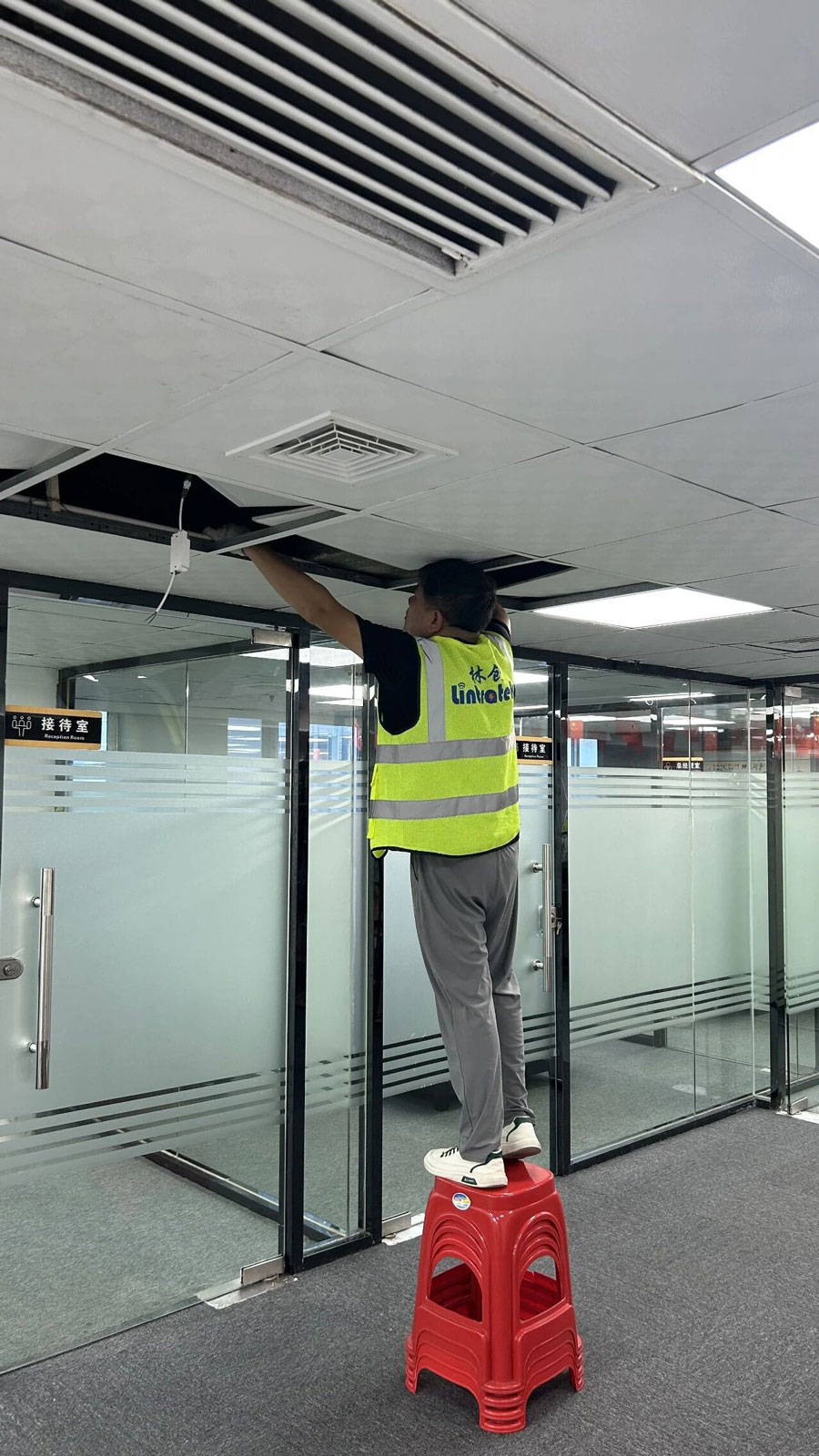
- Open floor plan (200-1000 sqm): One host with 2-4 indoor antennas can cover the space. Check our small and middle coverage solutions for reference models.
- Partitioned floor (1000-3000 sqm): Count the rooms, not the area. Each enclosed space needs its own antenna. A 2000 sqm floor with 15 private offices needs 15+ antenna points — not because of the square footage, but because each wall blocks signal from the next room.
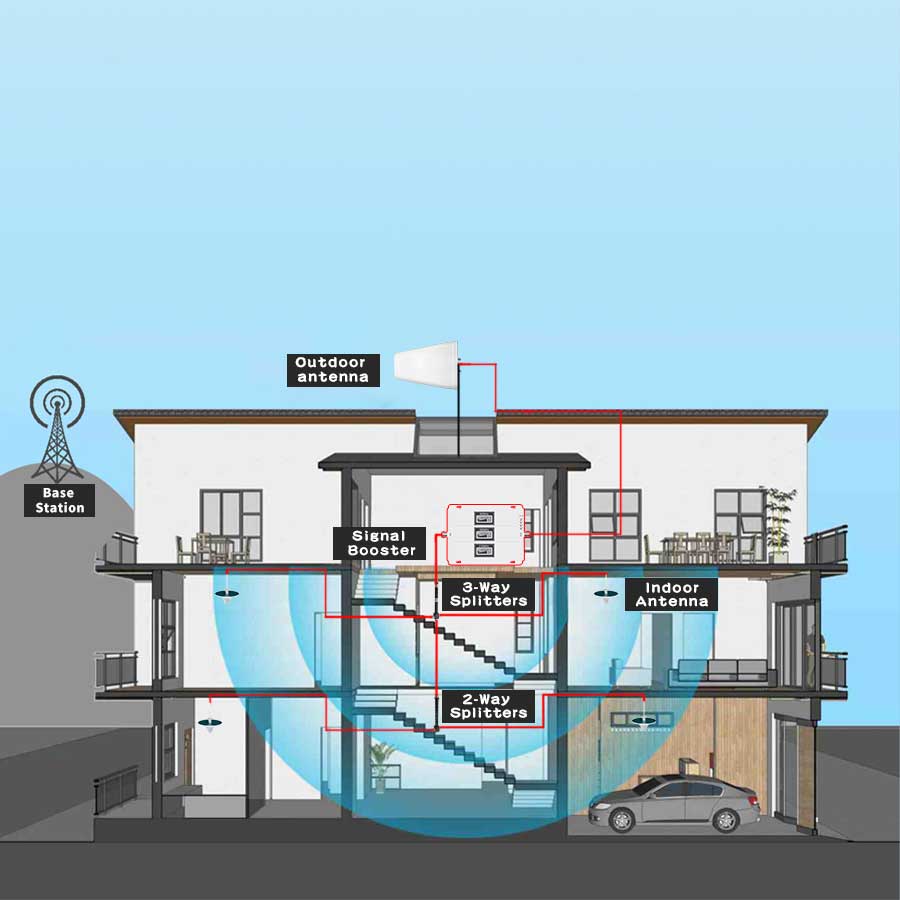
- Multi-story building (3000-6000 sqm): Typically one host per floor, with splitters feeding ceiling antennas in corridors and panel antennas in enclosed rooms. See our large size coverage solutions for the equipment configurations we use at this scale.
- Beyond 6000 sqm or multi-carrier multi-band: You’re entering territory where a booster-based system may not be sufficient. At that point, a hybrid approach or fiber optic distribution system becomes more practical.
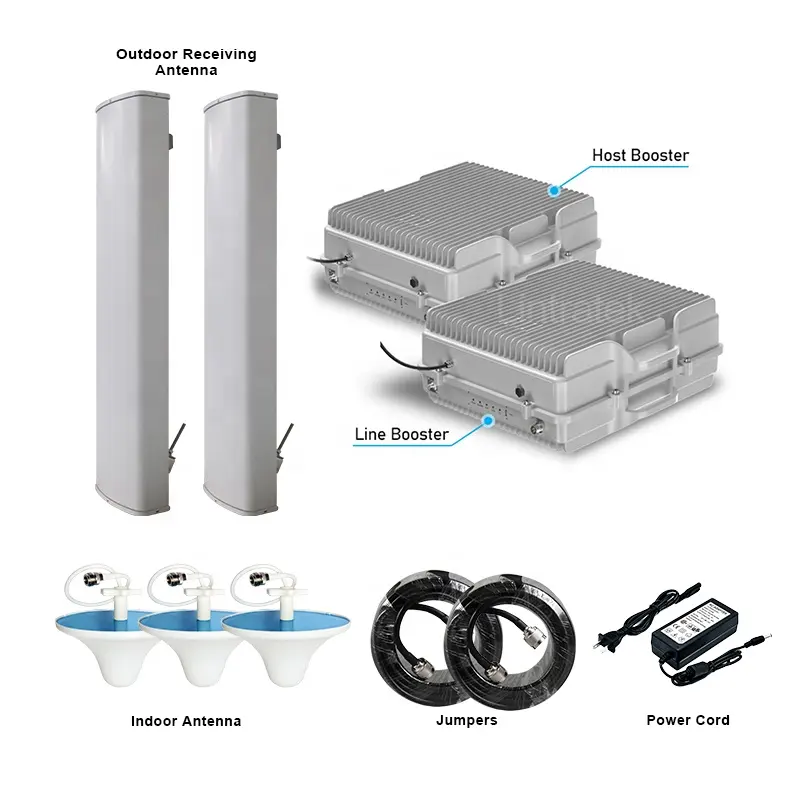
For distributors: when a client asks “how much does a mobile signal booster price?” — the honest answer is “it depends on the site.” A KW13A single-band kit covering 50-100 sqm is a very different investment than a KW33F tri-band system with 12 antennas covering 1500 sqm. The coverage requirement drives the equipment list, and the equipment list drives the cost.
Step 4: Select the Right Frequency Bands
This is the step where most orders go wrong.
A 4G repeater only works if it amplifies the frequency bands used by the carriers in your market. Buy the wrong bands and the equipment is useless — it’ll power on, show signal bars, and carry no actual data or voice.
Here’s how to get this right:
Identify the target carriers. Who are the end users subscribing to? In the US, that’s Verizon, AT&T, T-Mobile. In Europe, Vodafone, Orange, Deutsche Telekom. In Africa, MTN, Airtel, Safaricom. Each carrier operates on specific frequency bands.
Match bands to repeater configuration. Lintratek builds single-band, dual-band, tri-band, quad-band, and five-band repeaters. The more bands you support, the more carriers you cover simultaneously — but the unit cost goes up.
We maintain carrier-band reference pages for major regions:
- North America network operators — covers Verizon, AT&T, T-Mobile, Rogers, Telus, Bell
For example, if you’re deploying in the US and need to cover Verizon (B13 700MHz) + AT&T (B12 700MHz) + T-Mobile (B4 1700MHz), you’d spec a multi-band unit like the KW20L five-band repeater, which supports B5+B2+B4+B12+B13.
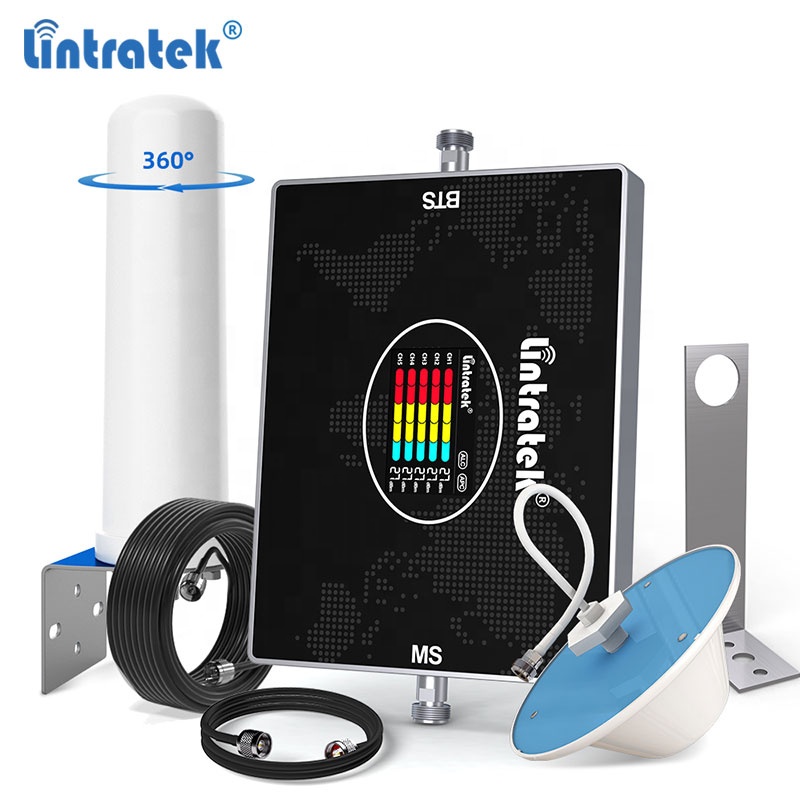
KW20L five-band gsm 4g repeater-cellular signal booster system
For GSM-specific applications — older networks still active in parts of Africa, South Asia, and Latin America — a booster gsm unit operating on 850MHz or 900MHz may be sufficient. But if the market is transitioning to 4G, stock multi-band units that cover both GSM and LTE bands. Your customers will thank you in two years when they don’t need to replace their entire inventory.
Step 5: Match Repeater Specs to Site Requirements
Quick Reference: Lintratek Product Matrix by Scale:
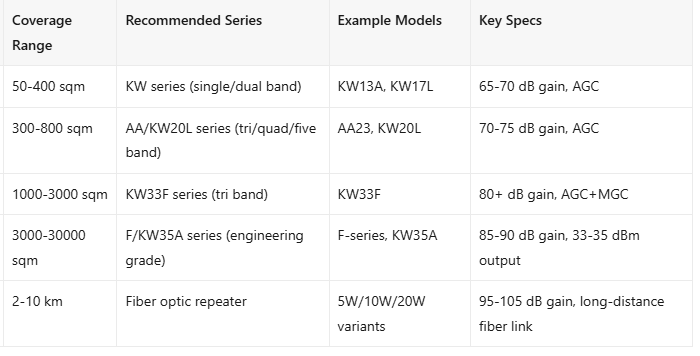
Please contact us for information regarding product.
Need Help Specifying a Project?
If you’ve got a building that needs signal coverage — whether you’re quoting a client or evaluating inventory — send us the details.
Floor area, building materials, partition layout, carrier bands in your market, and your donor signal readings. Our engineers will review it and come back with an equipment list and coverage design.
No generic brochures. No “one-size-fits-all” recommendation. A real answer based on your actual site.
Submit your project details here — or browse our full product range to see what we build.
We’ve been manufacturing signal coverage equipment since 2012. 155 countries. Over a million users. We know this stuff because we’ve been doing it for fourteen years — and we’re happy to help you get it right the first time.
Post time: Nov-18-2026