





There’s a moment every installer and distributor knows too well:
The signal booster is mounted. The antennas are placed. The signal readings on the host unit look solid.
Then you walk to the far corner of the building :
the last office at the end of the corridor, the meeting room behind the stairwell — and the bars drop. The coverage didn’t make it all the way through.

Or worse: the site has no mains power at all. You’re looking at a remote relay point on a hillside, a monitoring station in a rural zone, a construction site that hasn’t been wired yet. The equipment works. There’s just no electricity to run it.
Lintratek just released two products that deal with exactly these two problems. Not marketing fluff — actual engineering tools that solve gaps we’ve seen across 155 countries of deployment.

The WiFi Repeater That Finishes the Job
Let’s be honest. A 4G repeater or a mobile signal repeater handles the cellular side. But inside a building — especially a multi-story office, a villa layout, or a long corridor — the WiFi signal from the router doesn’t always reach every room. The router sits in the living room. The user stands in the master bedroom two walls and a staircase away. Video calls stutter. Screen mirroring circles.
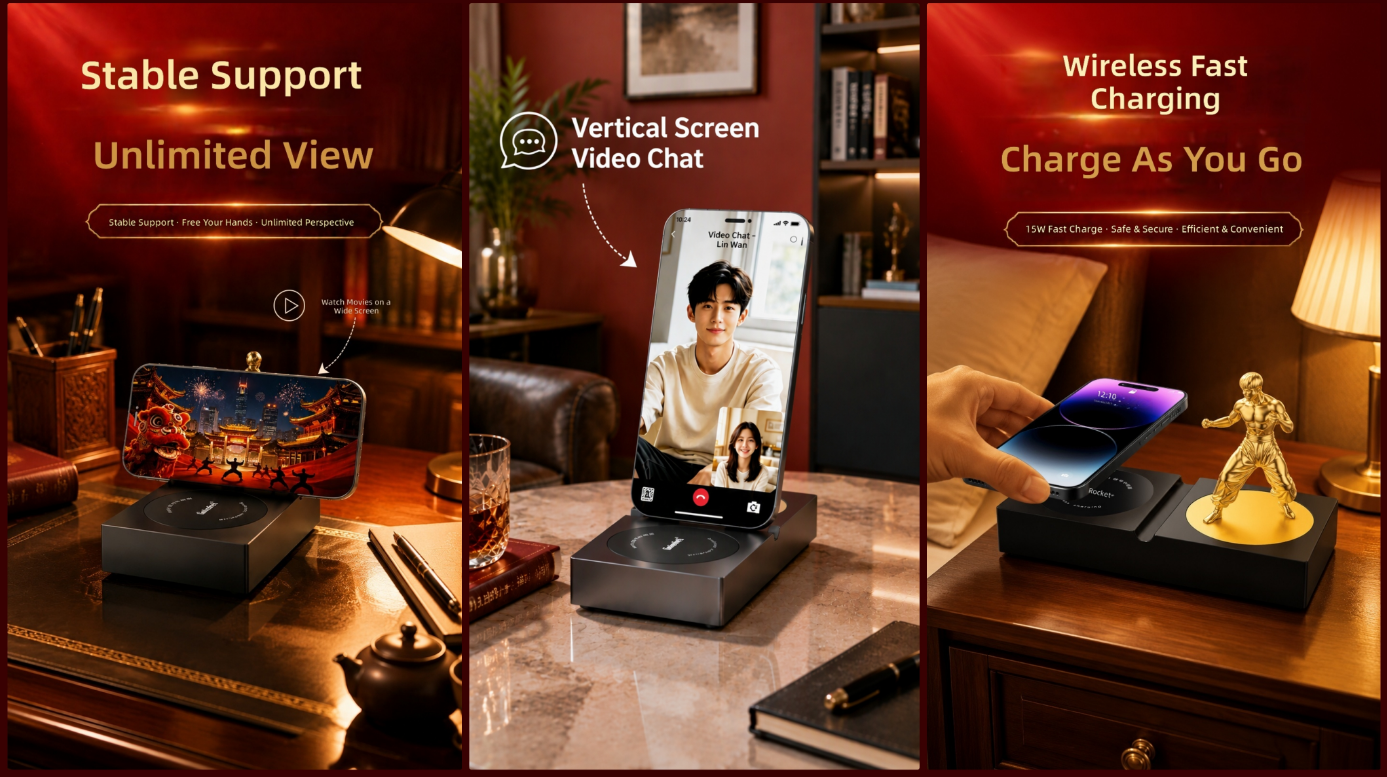
This is where the LC-WIFI120-C comes in. It’s a three-in-one WiFi repeater that does three things on one desk:
1) Dual-band WiFi relay. 2.4GHz and 5GHz simultaneously. The 2.4GHz band handles wall penetration — it’s the workhorse for getting signal through drywall and concrete. The 5GHz band handles speed — when you need bandwidth for streaming or large file transfers. The repeater picks up your existing WiFi and pushes it into the dead zone.
2)wireless charging. Put your phone on the base, it charges. Supports PD3.0 with 5V/9V/12V output through a Type-C input. For a contractor outfitting an office, this means the meeting room table has one fewer cable dangling off the edge.
3)Phone stand. Horizontal for watching content, vertical for video calls. The angle adjusts.
For B2B installers, here’s what matters: the unit measures 195×110×90mm, weighs under 200 grams, and draws 10mA in standby with sleep power below 50µA. Ventilation slots keep it cool during continuous operation. There’s an RJ45 port for wired backhaul — you can connect it directly to a switch or use it as a wired access point for a desktop or set-top box.

Where does this fit in your project pipeline? Think of it as the last device in a chain. Your cellular signal booster system brings the mobile network inside. Your router distributes internet. The LC-WIFI120-C pushes that internet into the rooms the router can’t reach. Together, they close the coverage loop.
The Solar Kit That Powers the Unreachable Point
Now for the harder problem:
You quoted a mobile network solution for a rural site — maybe a cell phone booster for rural areas covering a village 3km from the nearest tower, or a monitoring point on a mountain ridge. The repeater is ready. The antennas are spec’d. But the site has no mains electricity.

Running a power line to a remote location can cost more than the signal equipment itself. Temporary generators burn fuel and break down. That’s the gap.
Lintratek’s new 80W + 40AH Solar Power Kit is a complete off-grid power supply that ships in six components and assembles on-site:
Solar panel (RY-80A): 80W monocrystalline silicon, 23.1% conversion efficiency, 18V working voltage. This is the panel that does the heavy lifting — high efficiency means it generates usable power even in partial shade or overcast conditions.
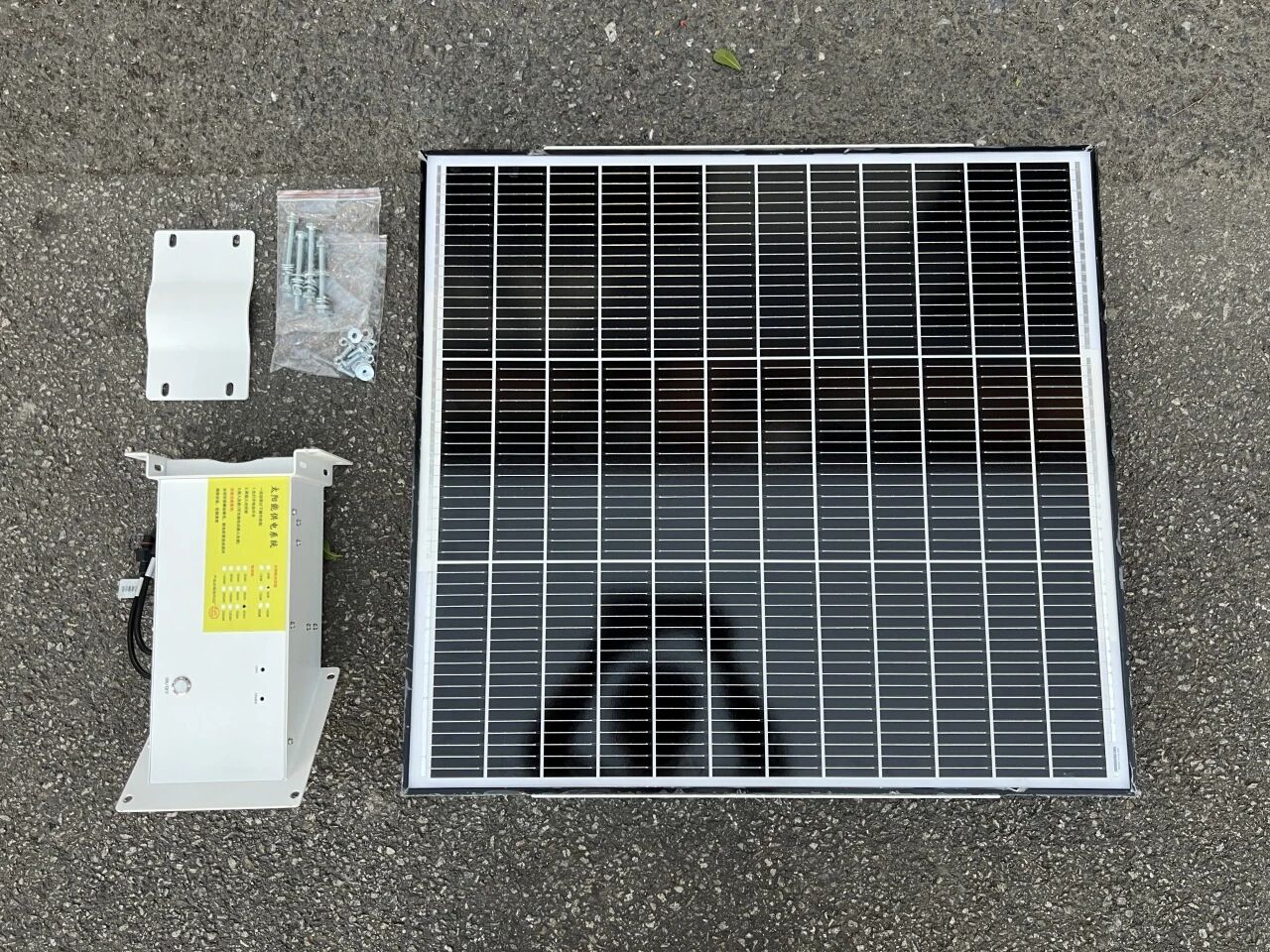
Solar controller: Manages the charging cycle and protects the battery. Prevents overcharge, over-discharge, overcurrent, short circuit, and reverse connection. All with auto-recovery. You don’t send a technician out every time the weather changes.
Battery: 12V 40AH lithium iron phosphate (LiFePO4) with an intelligent protection board. Cycle life rated at 1,500 to 2,000 charges. LiFePO4 chemistry means it won’t catch fire if punctured — a real concern when equipment sits outdoors unattended. It also holds charge through overcast stretches that would drain a cheaper lithium-ion pack.
Mounting hardware: Galvanized pole-mount bracket with a powder-coated finish. No trenching, no wiring through walls. Bolt it to a pole, connect the cables, and the system runs.
Cabling and optional 12V-to-5V converter: 12V devices connect directly to the output. 5V devices — like some smaller repeaters or monitoring cameras — use the step-down converter with the appropriate connector.
The solar panel has a 25-year design life with a 5-year warranty. The battery carries a 3-year warranty. Daily operation produces zero electricity cost.
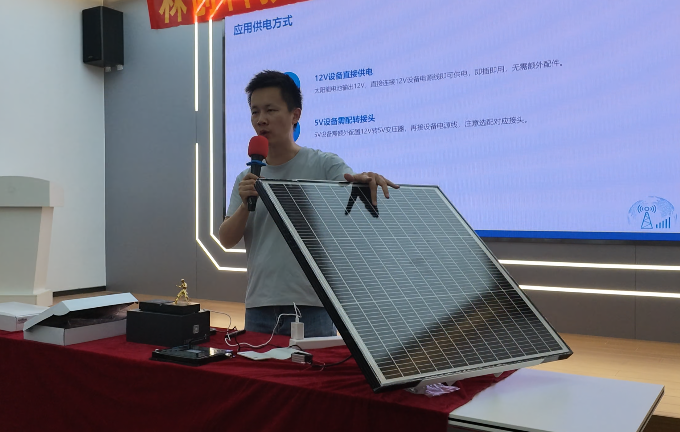
For distributors and engineering firms, this opens up a project category you may have been turning down. Sites that previously got a “sorry, no power, can’t help” response are now quotable. The solar kit pairs naturally with a power signal booster or a fiber optic repeater at remote donor locations. You’re no longer limited to sites where the power company already showed up.
Why These Two Products Matter Together ?
Here’s the thing. After 14 years of building network booster systems — from a mobile phone signal repeater covering a 100sqm office to a booster GSM rig serving a multi-floor commercial building — we noticed a pattern.
About half the challenges in this industry aren’t about the booster itself. They’re about the two things around it: getting the wifi signal the last few meters into the room, and getting power to the equipment that has no outlet nearby.
The LC-WIFI120-C handles the first. The solar kit handles the second.
If you’re a system integrator quoting a full building — say a mobile network booster for office deployment across several floors — you can now include WiFi coverage extension as part of the same package. The client gets cellular signal and WiFi from the same contractor. Fewer vendors, fewer finger-pointing situations when something doesn’t work.
If you’re a distributor sourcing equipment for rural projects — maybe a government tender for village coverage or highway tunnel signal — the solar kit means you can offer a complete package instead of selling the repeater and hoping the end user figures out the power situation.
Checking Frequencies for Your Market?
Before you place an order, make sure the repeater you’re pairing with these new products matches the local carrier bands. We’ve got reference pages for North America, South America, Europe and Africa, and Africa. Pick your region, confirm the bands, then match them to the right repeater model.
If you’re not sure which combination works for your project — or you need a mobile network solution that includes both signal coverage and off-grid power — send us your site details through our customized solution form. Our engineers will put together a package that fits. Pls contact us !
Post time: Nov-21-2026