





Ask any experienced installer about failed mobile phone signal repeater jobs, and you’ll hear the same story behind most of them: nobody surveyed the site first.
The kit was fine. The installation was fine. The problem was that the design was built on a guess — wrong donor direction, wrong gain, wrong antenna count. And every one of those guesses gets discovered after the invoice, when the client is already frustrated.
A proper survey takes a few hours. It’s the cheapest insurance a project can buy, and it’s also your best sales tool: clients trust a contractor who measures before they quote.
Here’s how we run one, step by step — the same process our engineering team uses on projects worldwide.
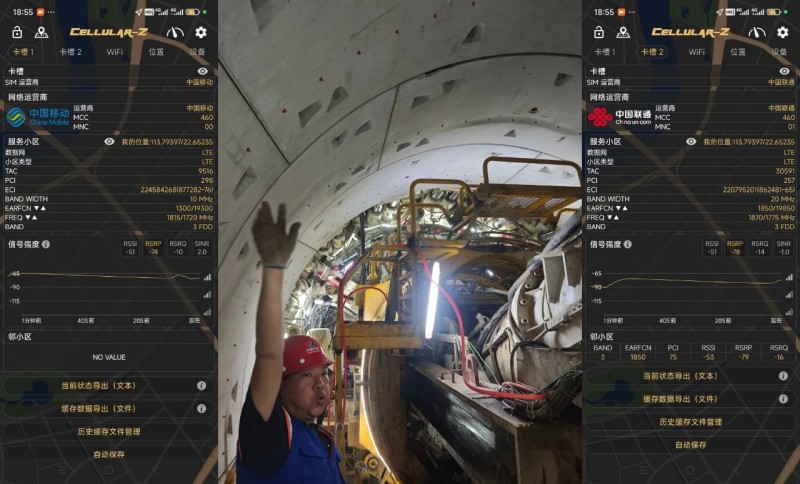
Boost Cell Phone Signal In Building
Why a survey matters more on commercial jobs than anywhere else
On a small shop, a wrong guess costs you an afternoon of rework. On a five-floor building or a factory campus, it costs you a week of labor, a restocking fee, and possibly the client’s next three projects.
Commercial buyers also ask harder questions. A facility manager who hears “we’ll figure it out during installation” will hire someone who brought drawings instead. A survey report — with readings, coverage maps and equipment notes — is what separates a quote from a bet.
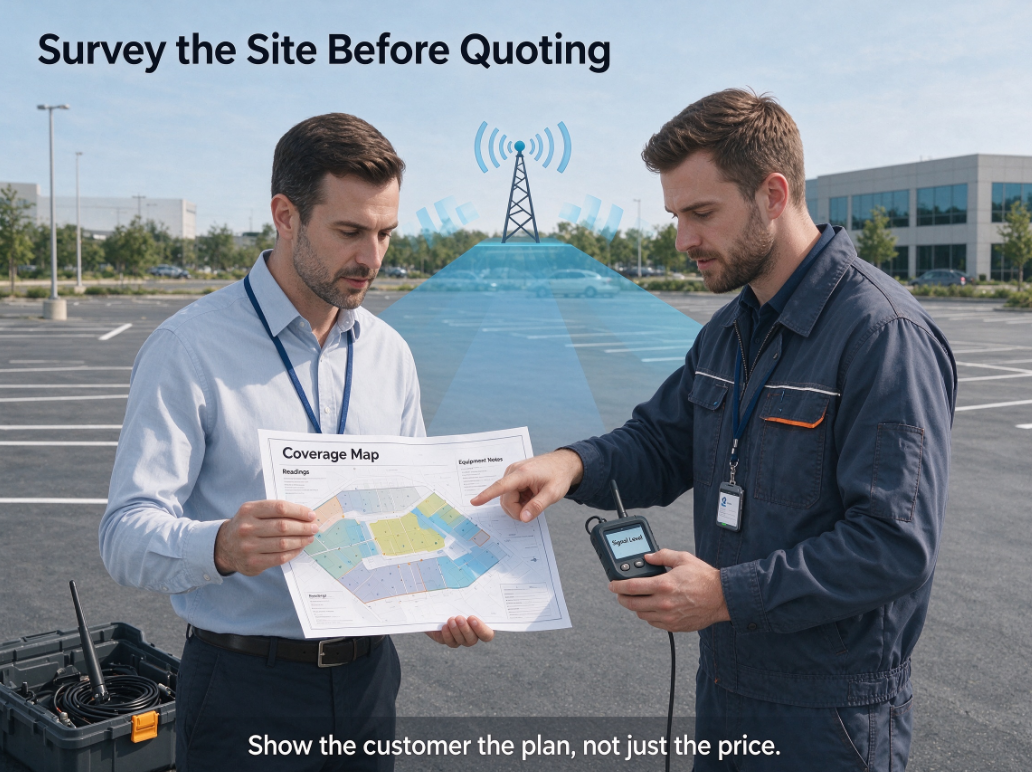
What to bring: the survey kit
The good news: nothing here is exotic.
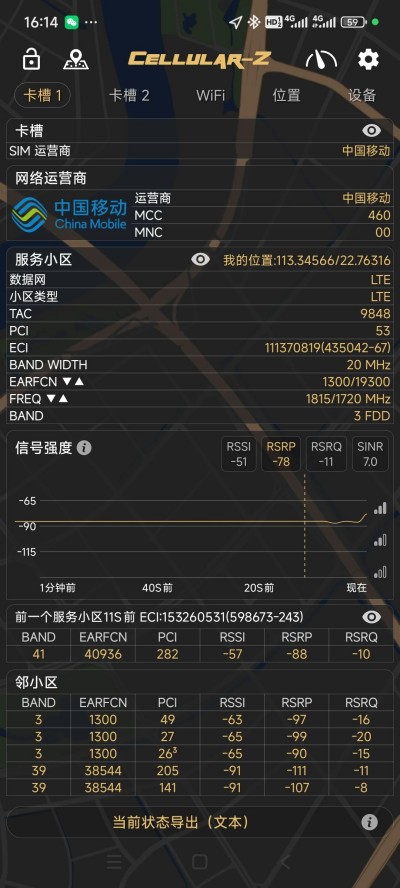
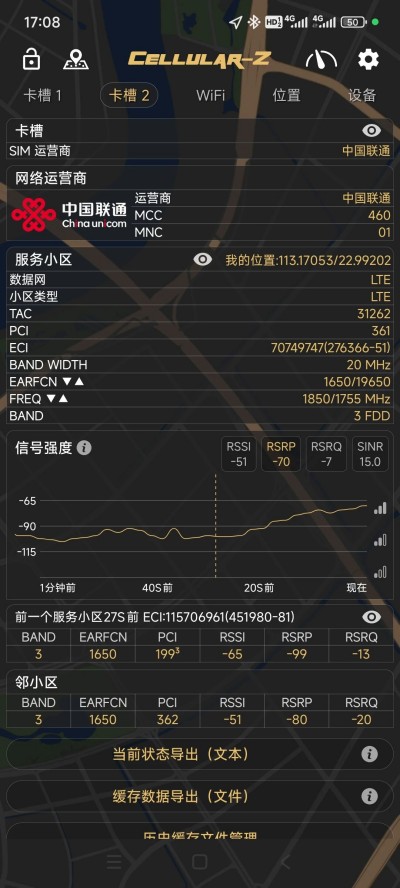
- A phone with a network info app (shows band and RSRP) — or better, a dedicated signal meter
- A laser rangefinder for cable runs and antenna heights
- Floor plans, even rough sketches
- A notebook or survey form with a spot for every reading
- A ladder or drone access for roof readings, arranged in advance
That’s it. The tool matters less than the discipline: every number gets written down at the exact spot it was measured.
Step 1: Interview the client before you climb anything
Ten minutes of questions saves hours of surveying.
Where do complaints cluster — meeting rooms, the basement, the far corner of the floor? What matters more, calls or data? Any plans to renovate, extend, or add floors? Who controls the roof and the cable routes?
The answers shape everything. A client who lives on video calls in one meeting room needs a different design than one who just wants lobby calls to stop dropping. And “we’re adding a warehouse wing next year” changes whether you design for today or for 2027.
Step 2: Map the donor signal outside
This is the reading the whole project hangs on.
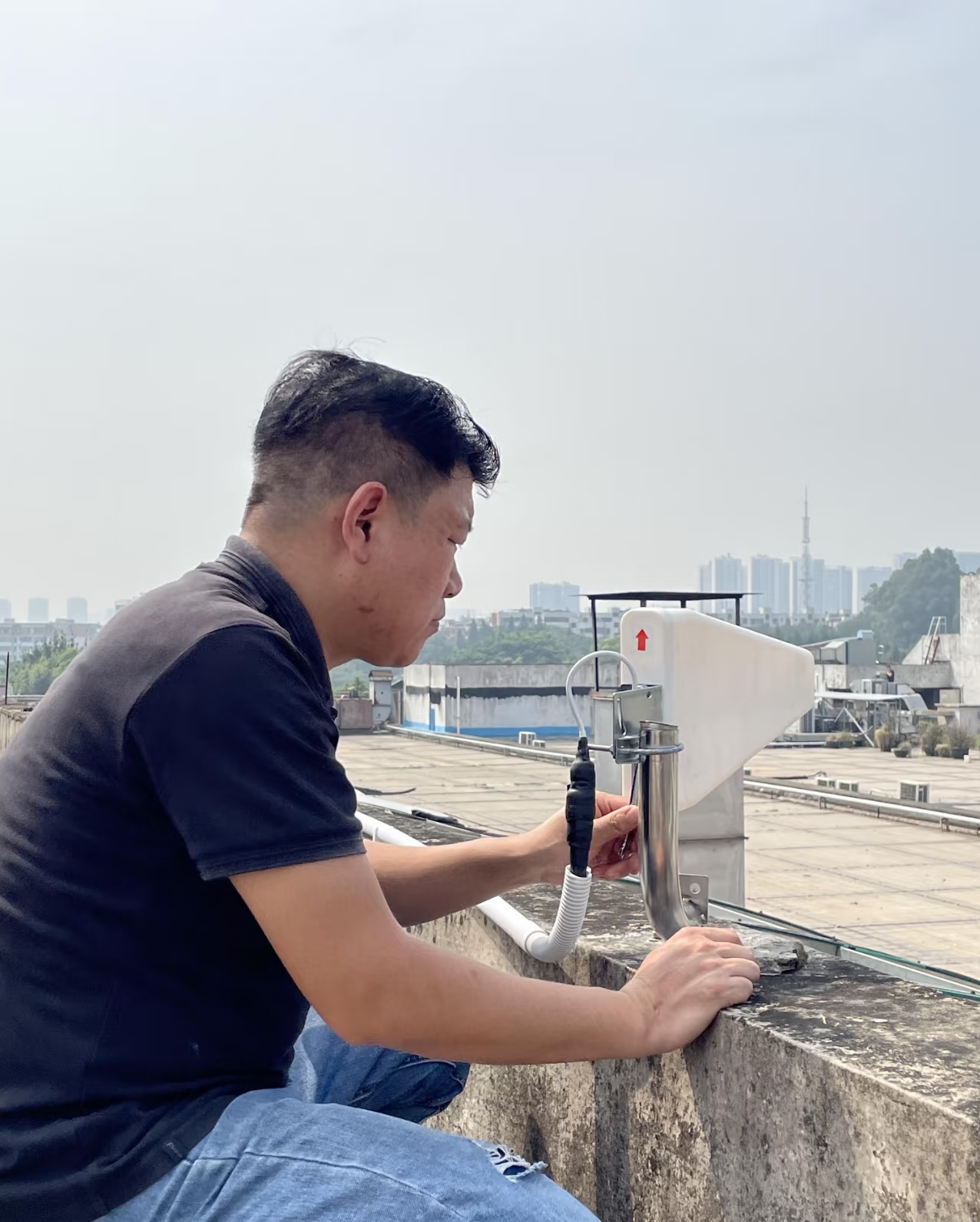
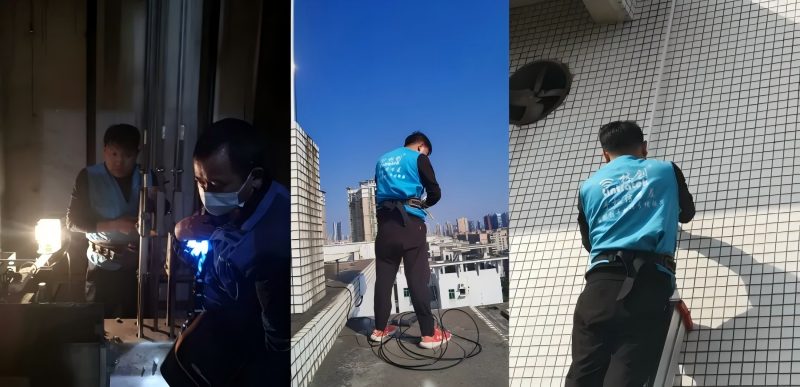
Walk the perimeter, then the roof. At every candidate mounting point, log the band, the reading, and the direction toward the tower. You’re hunting for two things at once: the strongest usable donor signal, and a spot far enough from where the indoor antennas will live.
That second part is the isolation question — the donor antenna and the service antennas need real separation, or the amplified signal loops back and the system fights itself. Finding both conditions in one location is the core skill of a repeater survey.
Record readings at different heights too. Sometimes a signal that’s mediocre at street level is strong two meters up, which changes the mast plan and the cost.
Step 3: Walk the dead zones inside
Now map what you’re fixing.
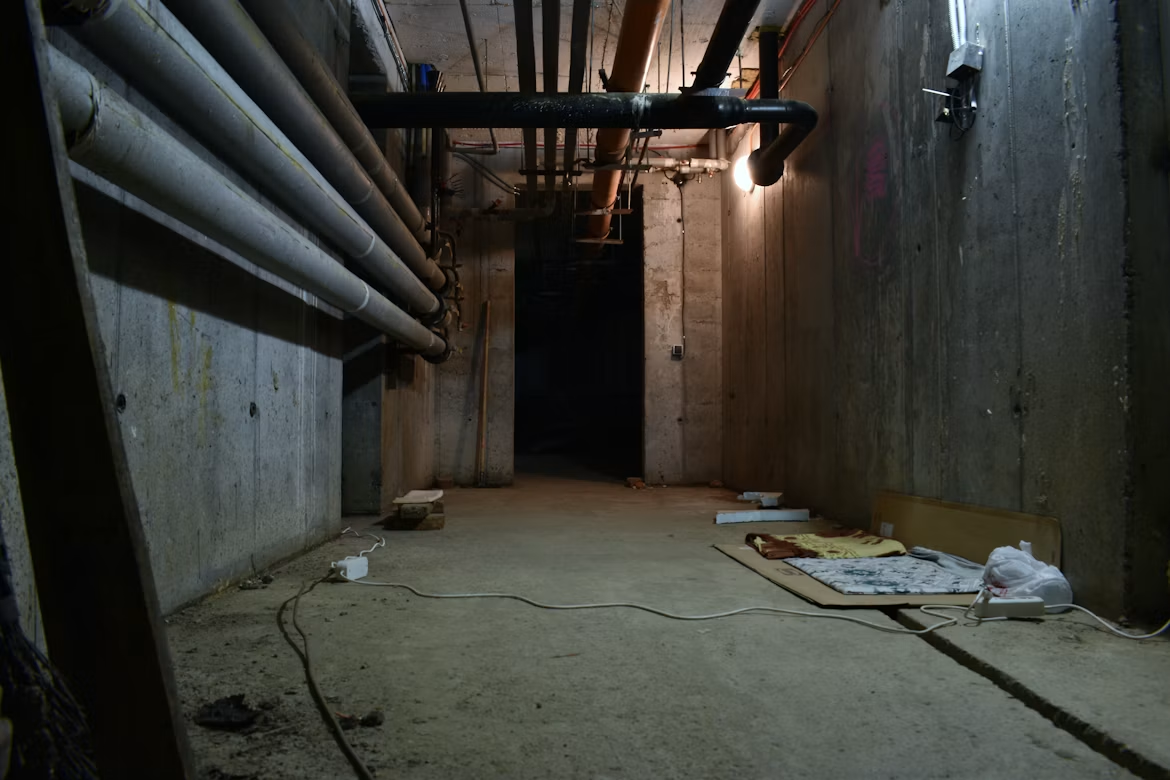
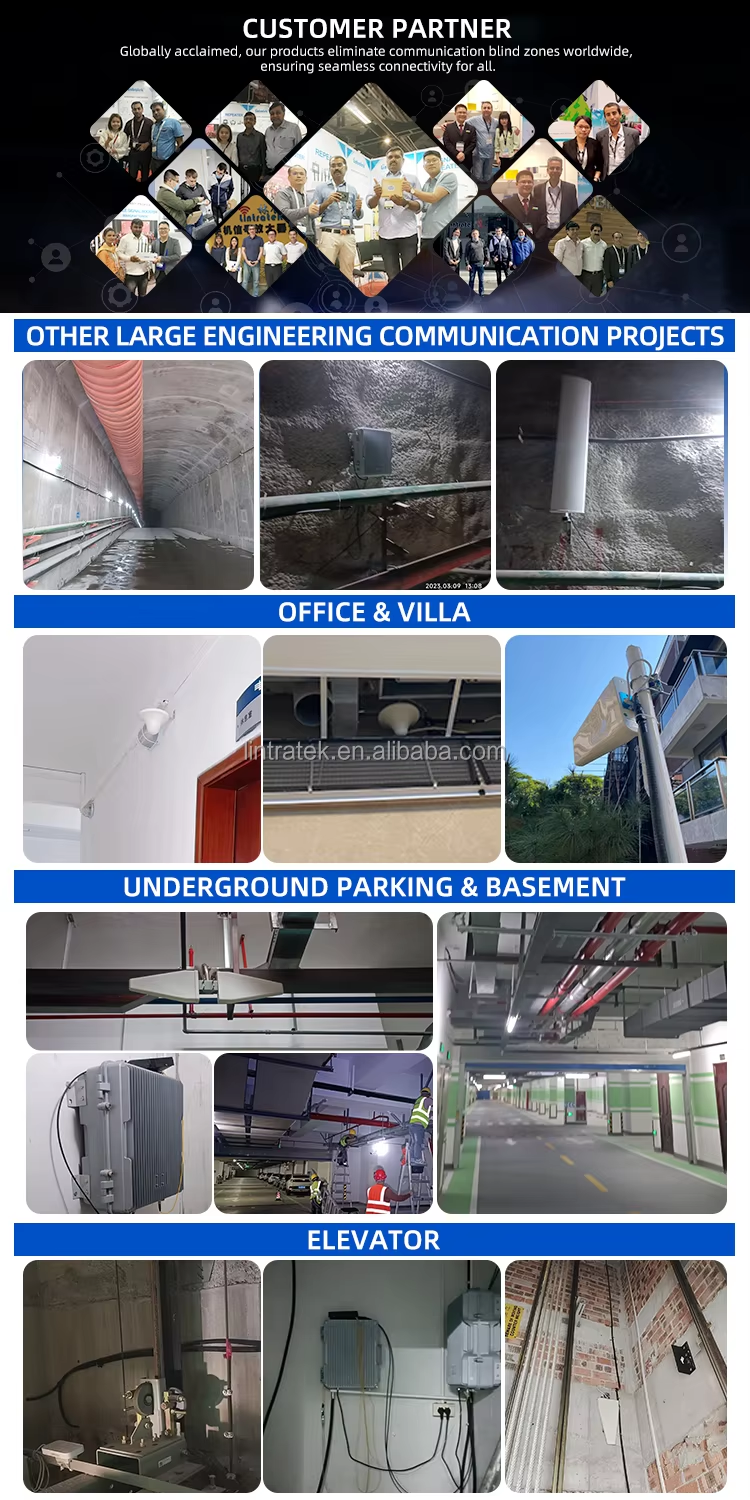
Test every floor, every corner, stairwells, and — always — the basement. Underground levels are where mobile signal goes to die, and clients forget to mention them until the invoice stage. Concrete, rebar and plant rooms eat signal completely, which is why a dedicated network booster for basement design is its own exercise rather than an afterthought.
Mark each dead zone on the floor plan with a simple strength reading. You’re building a heat map on paper — five minutes per floor now becomes the antenna layout later.
Step 4: Check the building, not just the signal
Half of a survey is about the physics. The other half is about the building.
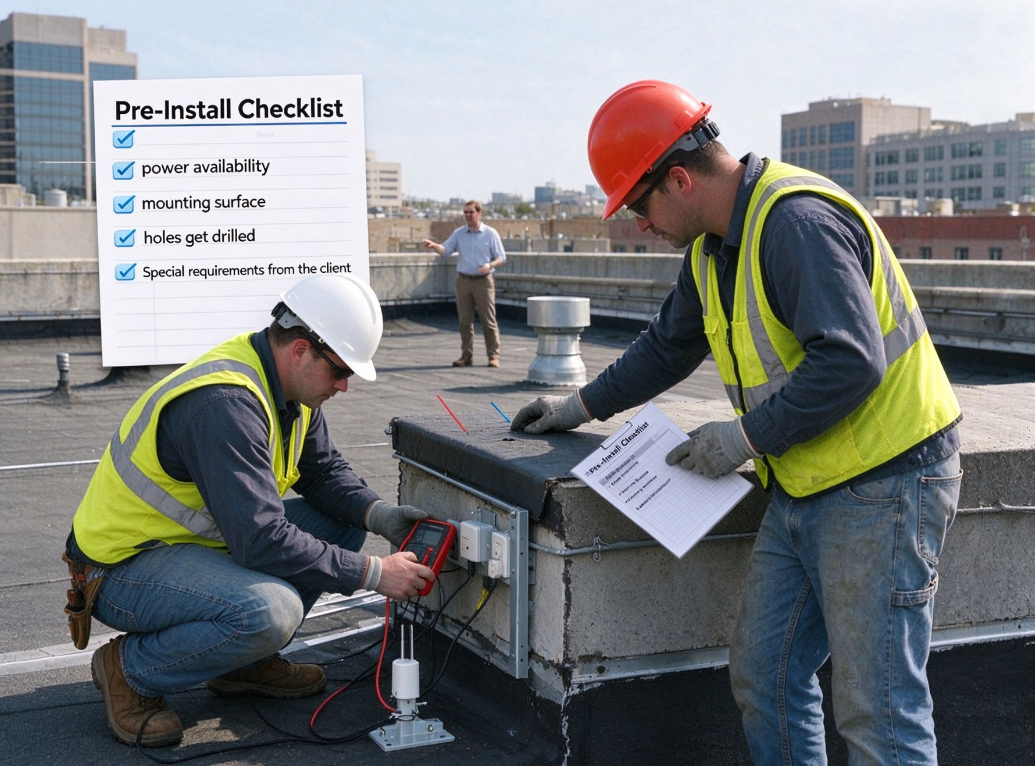
Trace realistic cable routes from the cellular signal booster location to each antenna point. On a mobile network booster for office project this usually means finished ceilings and locked riser rooms, so confirm access early. Measure the longest run — coax loss grows with every meter, and past a certain distance the design math changes. Check power availability at the equipment spot, mounting surfaces on the roof, and whether the landlord wants anything special before holes get drilled.
A design that ignores routing turns into change orders later. A design that respects the building gets installed once.
Step 5: Choose the equipment type from the data
Now — and only now — does equipment selection start. This is where survey data turns into hardware.
- A strong, close donor with modest coverage targets usually points to a single-band booster gsm unit or a wideband 4g repeater
- For most mid-size buildings, one well-placed mobile signal repeater kit handles it.
- Bigger footprints and multiple zones call for a larger power signal booster with a splitter network. A donor that’s far away or badly obstructed moves the design to a fiber optic repeater system.
And when the client’s building outpaces what repeaters can do — multi-tower campuses, dozens of zones — that’s the moment to discuss full in building das solutions instead of overselling a repeater. Recommending the bigger system when it’s genuinely needed earns more trust than quietly installing something that will underperform, and it moves the conversation from one device to a complete mobile network solution.
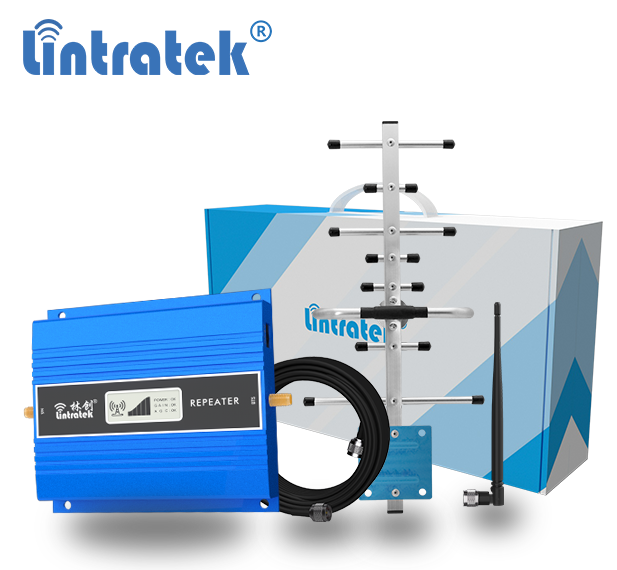
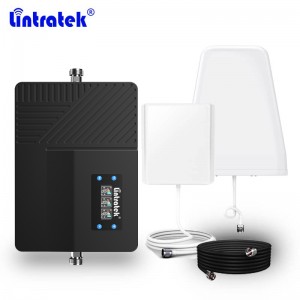
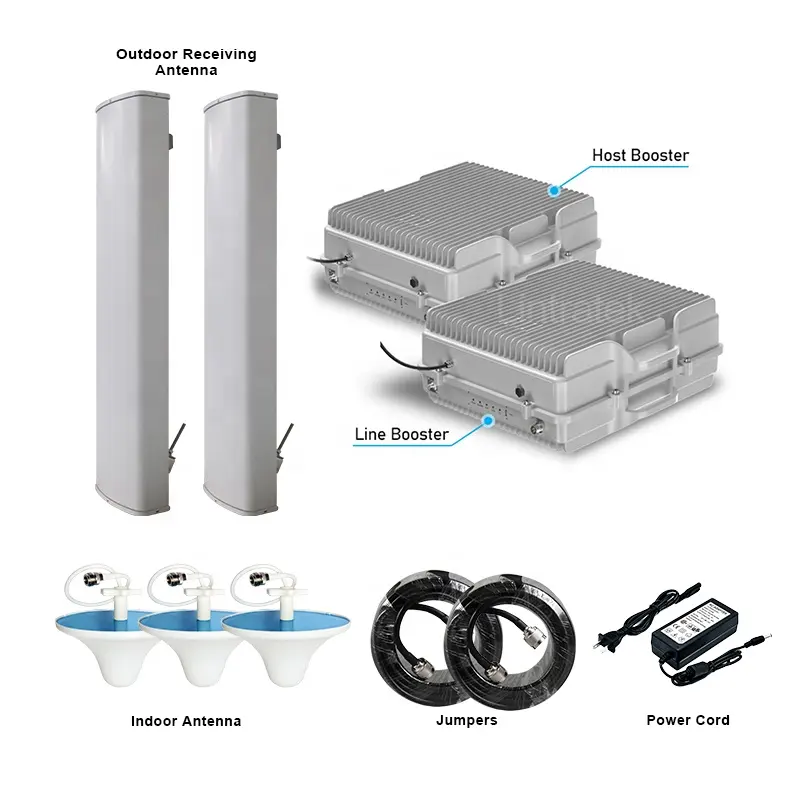
single-band booster gsm mid- power mobile signal repeater for office power signal booster weak signal solution
Step 6: Turn readings into a plan and a quote
The deliverable of a survey is a short document, not a folder of impressions:
- Donor readings, locations and directions
- Dead-zone map per floor
- Proposed signal booster system — unit, antenna count and cable routes
- Expected coverage after installation
- The quote, with the mobile signal booster price broken out by hardware, cabling and labor
That last line matters. Clients accept pricing far more easily when they can see what each part buys — and a contractor who shows this level of detail rarely gets shopped purely on cost.
For deep dives on the quoting side, our guides on what moves repeater system pricing and choosing between single- and multi-band units pair well with this one.
When to bring the factory in ?
Most straightforward buildings, a trained crew can survey alone. But some sites deserve a second pair of eyes: remote terrain with unclear donor sources, long-distance fiber runs, hospitals and plants where downtime has real costs, or any project where the readings came back marginal.
That’s exactly what our engineering team does every day. For cell phone booster for rural areas projects and other difficult terrain, we review your survey data, help shape the design, and stay through commissioning — so the risk doesn’t sit on your shoulders alone.

cell phone booster for rural areas、booster gsm、mobile signal booster price
Quick answers before you head to the site
Q1: How long does a commercial survey take?
A1: A single building usually takes two to four hours including the report. Large campuses take a day. It’s the fastest part of the project and the one that prevents the slowest failures.
Q2: Can we survey with just a phone app?
A2: For a first pass, yes — modern apps show band and signal strength. For anything multi-band or commercial-scale, a dedicated meter reads more precisely and makes your report look as professional as it is. Either way, verify before you spec a network booster — never after.
Q3: Do we need a survey for every project?
A3: Every project deserves at least a walk-through. The full written survey pays for itself from roughly the second building upward — below that, a documented reading sheet still beats guesswork.
Got a site coming up? Send us the location, floor plans and your donor readings — even rough ones — through our contact page, and our engineering team will help you turn them into a design and an equipment list, free of charge.
Post time: Nov-28-2026