





Makati City, Metro Manila. September 2026.
A multi-floor commercial building in the Forbes Park area was going through renovation. Inside, the structure was concrete, steel, and exposed MEP runs — exactly the kind of environment that kills cellular signal before it reaches the people who need it. The client needed a mobile network solution that would deliver stable voice and data coverage across the finished space without slowing down the construction schedule.
Lintratek supplied the signal equipment. The local contractor handled the install. The project wrapped on schedule. Here’s what the process actually looked like, and what it can teach you about deploying a cellular signal booster system in a real commercial building.
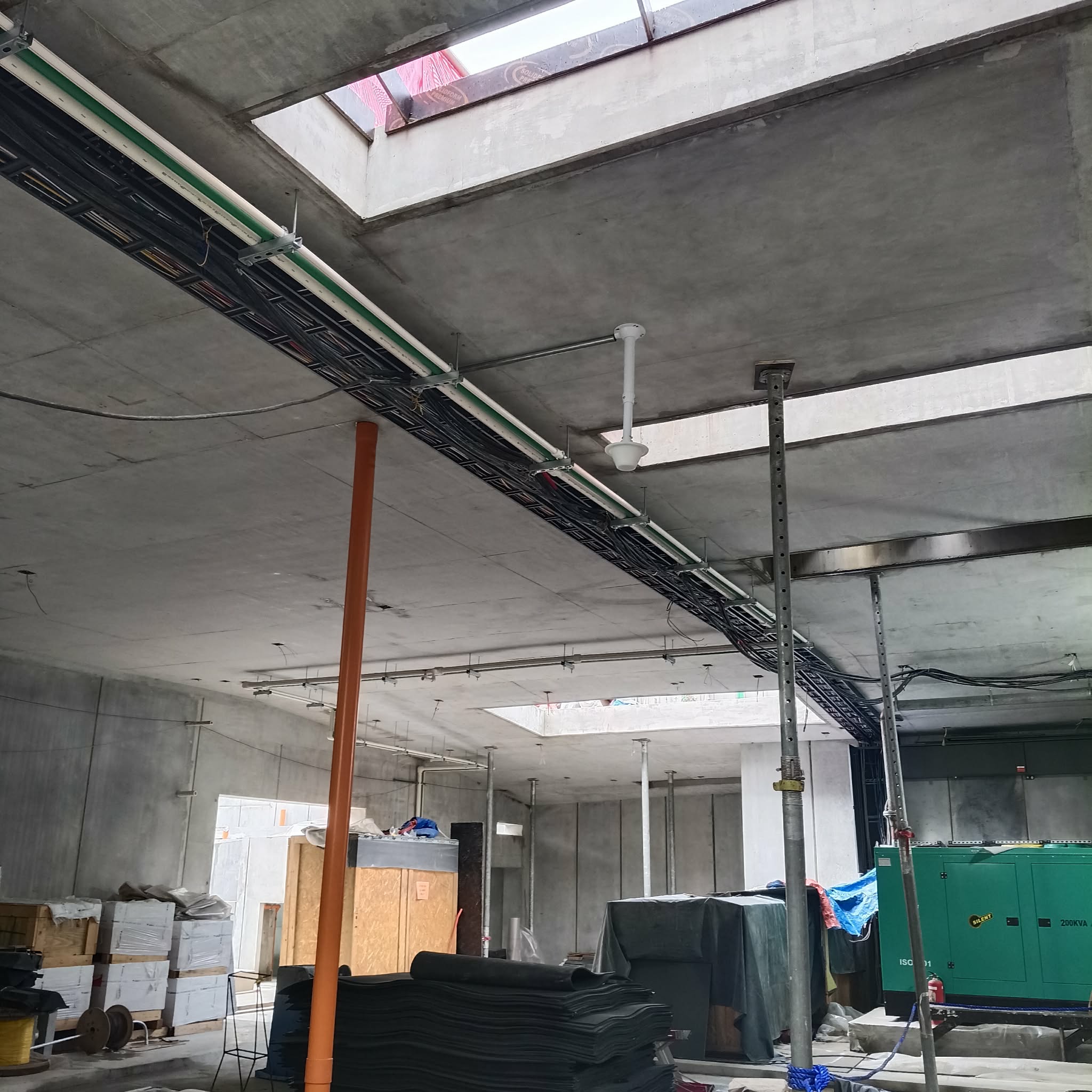
The Site: Concrete, Steel, and a Tight Timeline
The building was mid-renovation. Walls were open, ceilings were exposed, and the MEP infrastructure — ductwork, cable trays, sprinkler lines — was already in place. That meant two things.
1)First, signal from outdoor towers barely made it inside. Concrete columns and steel beams block RF the same way they block everything else.
2)Second, the install had to fit around other trades. There was no option to come back later and tear open finished ceilings.
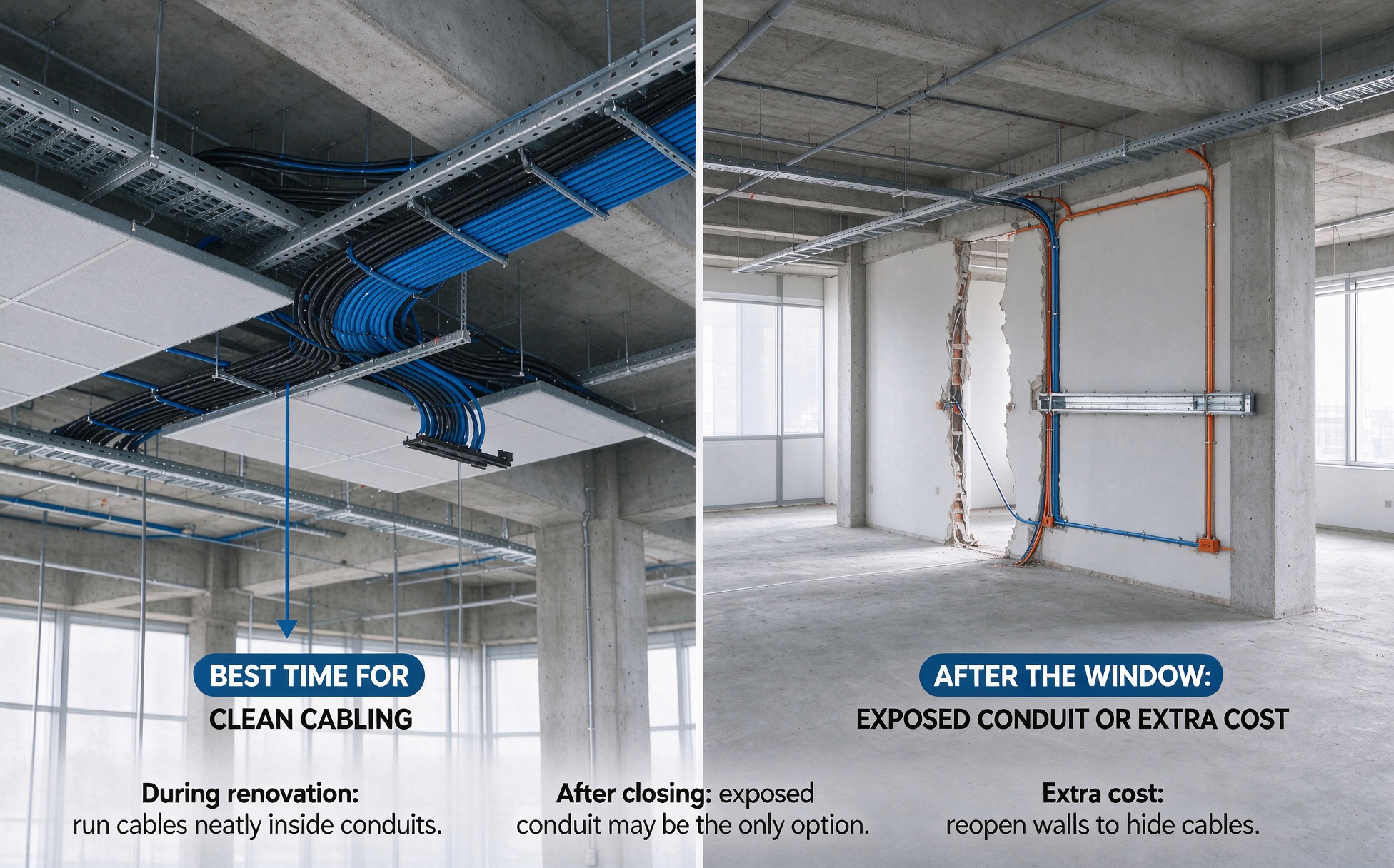
This is a common scenario for a mobile network booster for office or commercial projects. The opportunity to run cable cleanly only exists during renovation. Miss that window, and you’re either surface-mounting conduit or paying to reopen walls.
Step 1: Site Marking and Layout Planning
Before any conduit went up, the team walked the site and marked antenna locations based on the coverage plan. In a building like this, you don’t guess — you measure, mark, and confirm routes.
The coverage plan dictated where each service antenna would go, how cable would drop from the ceiling, and where the main cable runs would feed back to the equipment room. That planning step is what separates a clean installation from a mess of exposed cable that fails inspection.
For distributors and contractors quoting projects, this is worth remembering: the cost of a mobile signal booster price quote depends heavily on how much cable routing and conduit work the site requires. A 500-square-meter open floor is cheap. The same area split into rooms and corridors with finished ceilings is a different job entirely.
Step 2: Conduit Routing and Fabrication
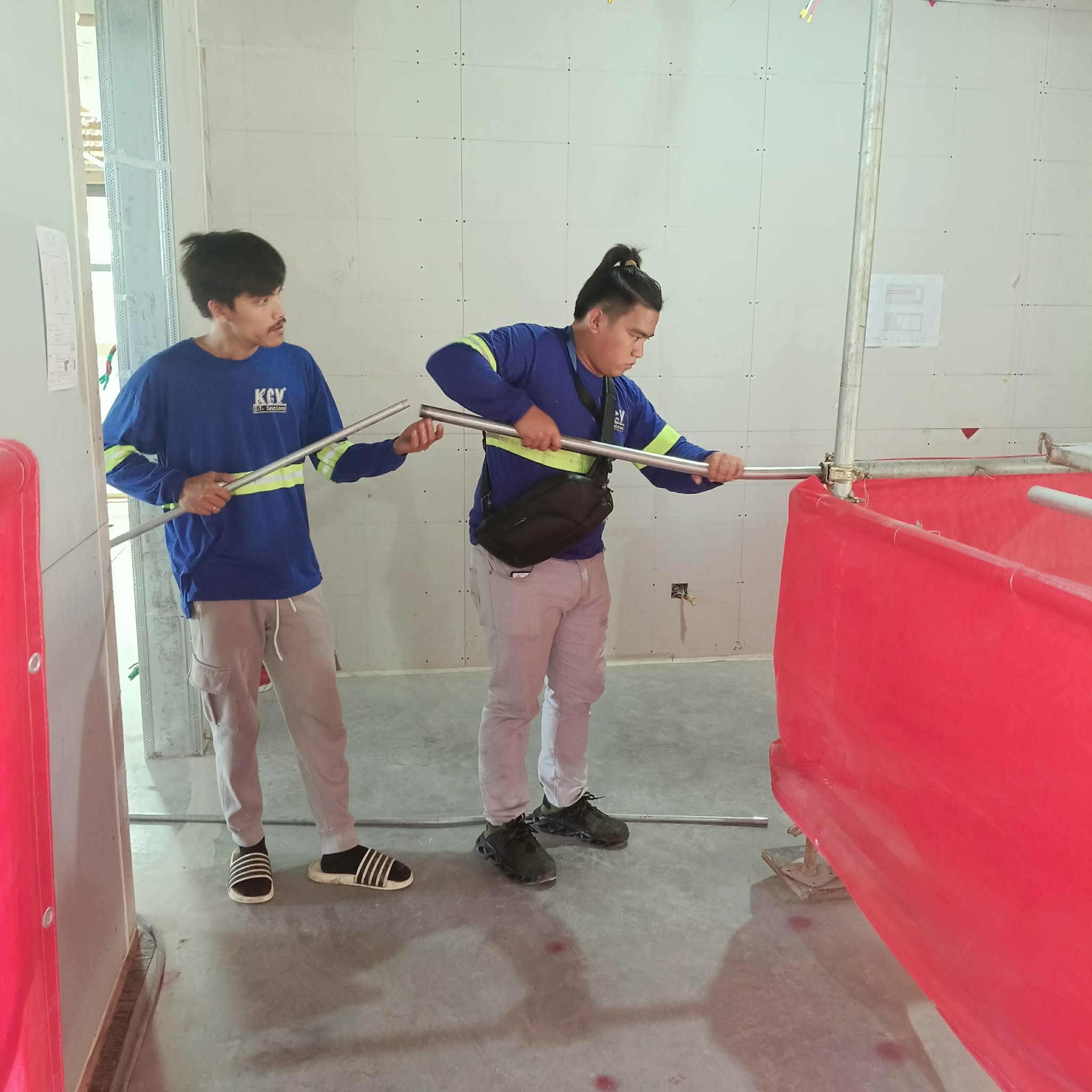
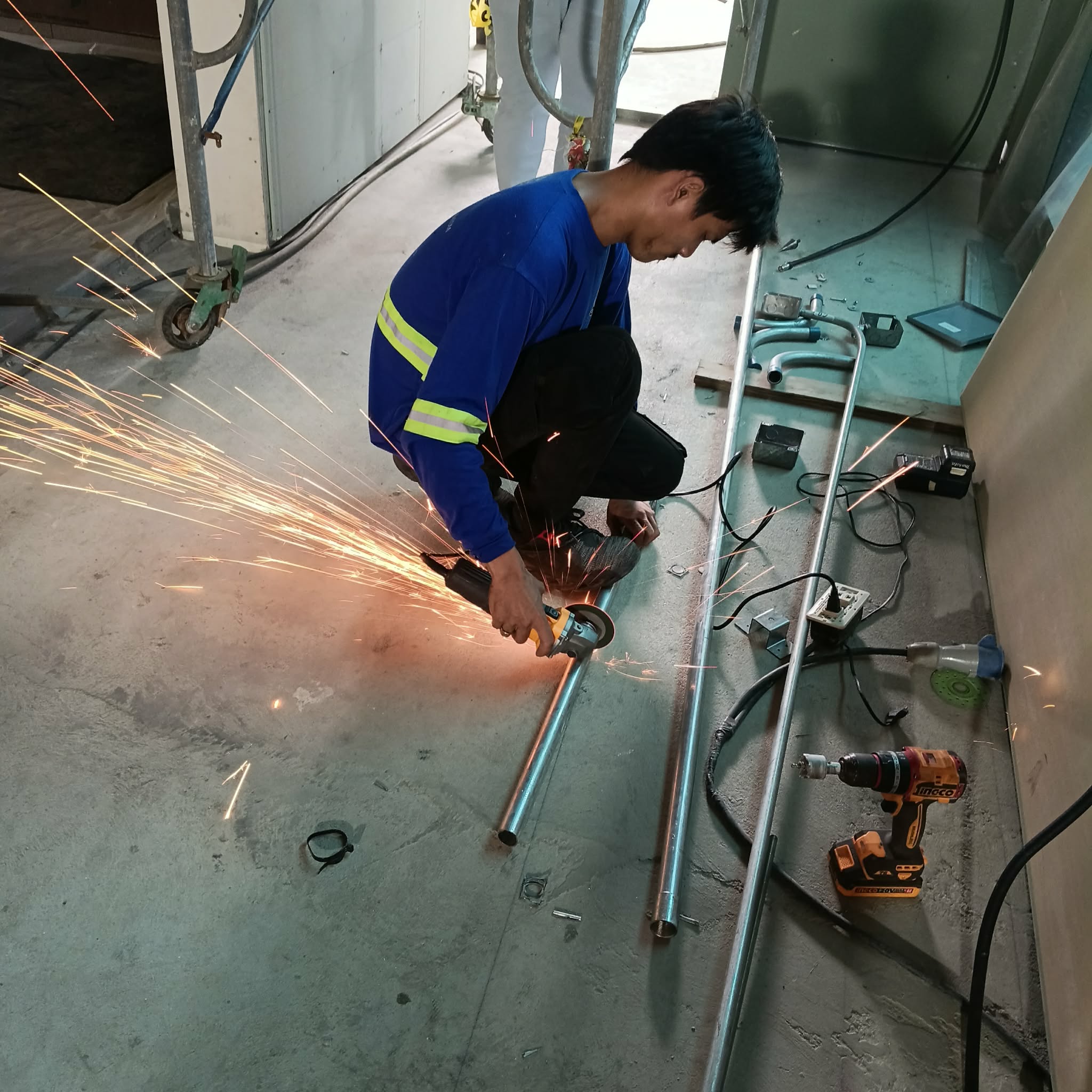
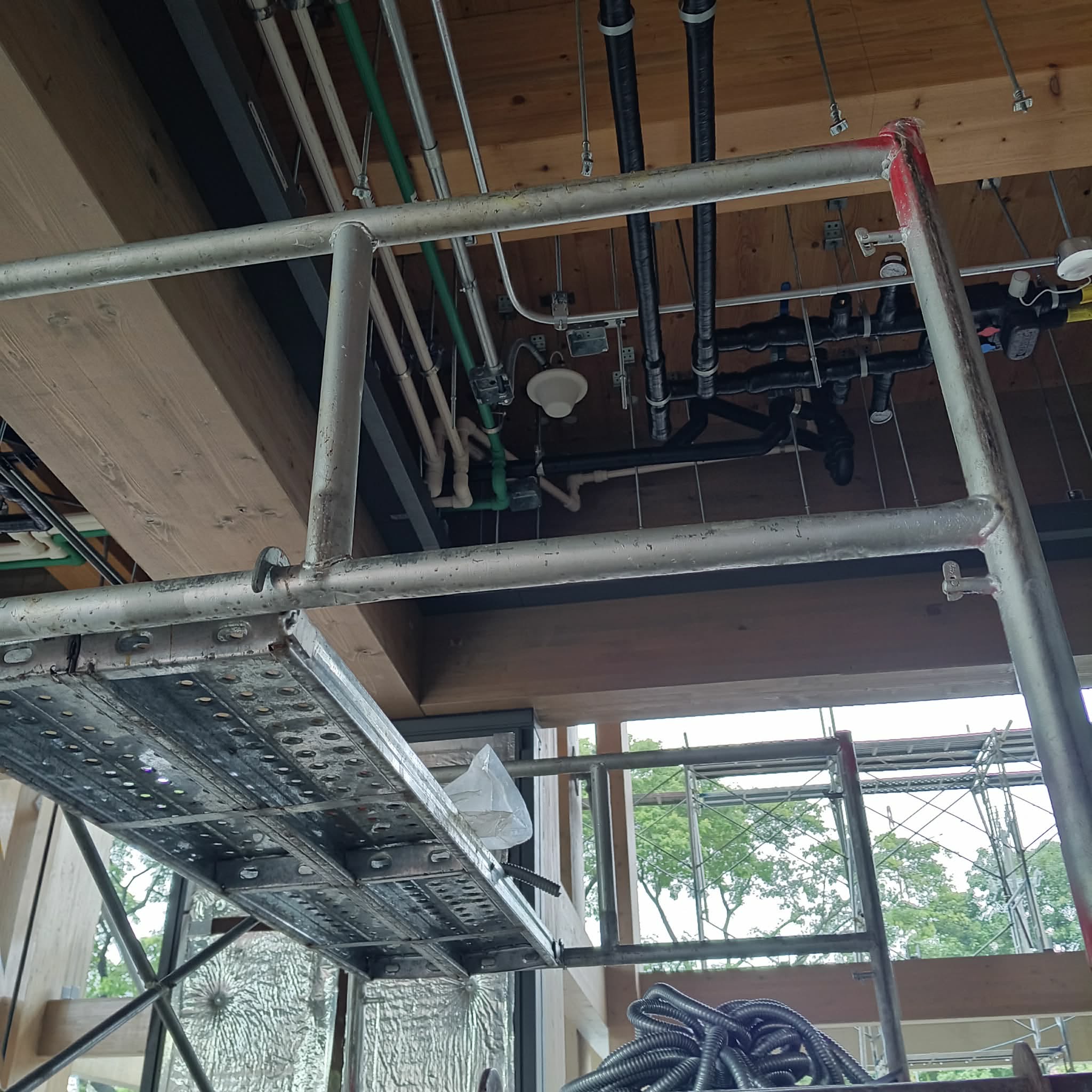
The installation team used galvanized metal conduit for the cable runs — cut to length on-site, routed along ceilings and walls, and secured to the building structure. You can see the fabrication work in the progress photos: workers cutting conduit with angle grinders, fitting elbows, and welding support brackets into place.
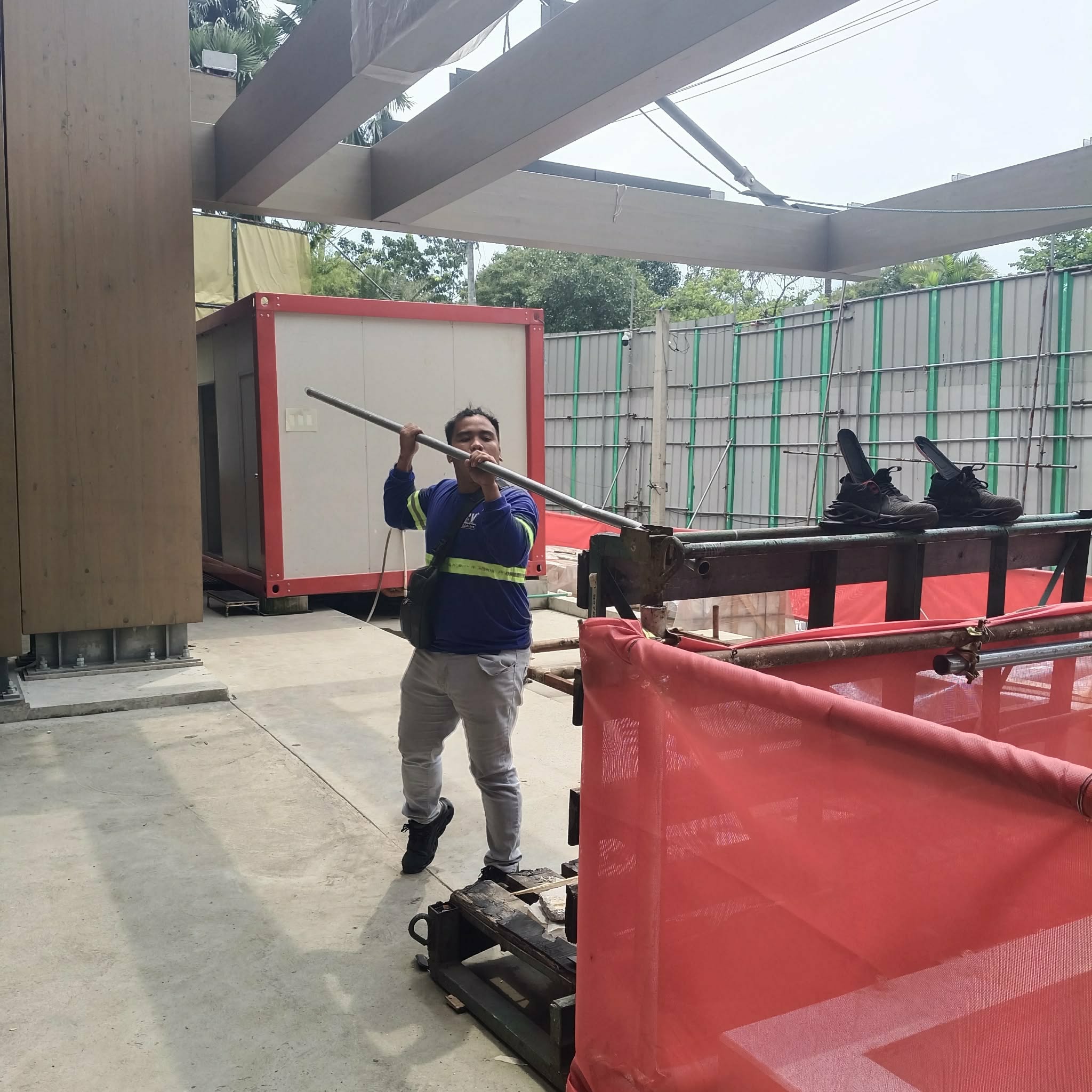
5g signal booster tri band cell phone signal booster cell phone signal booster for basement
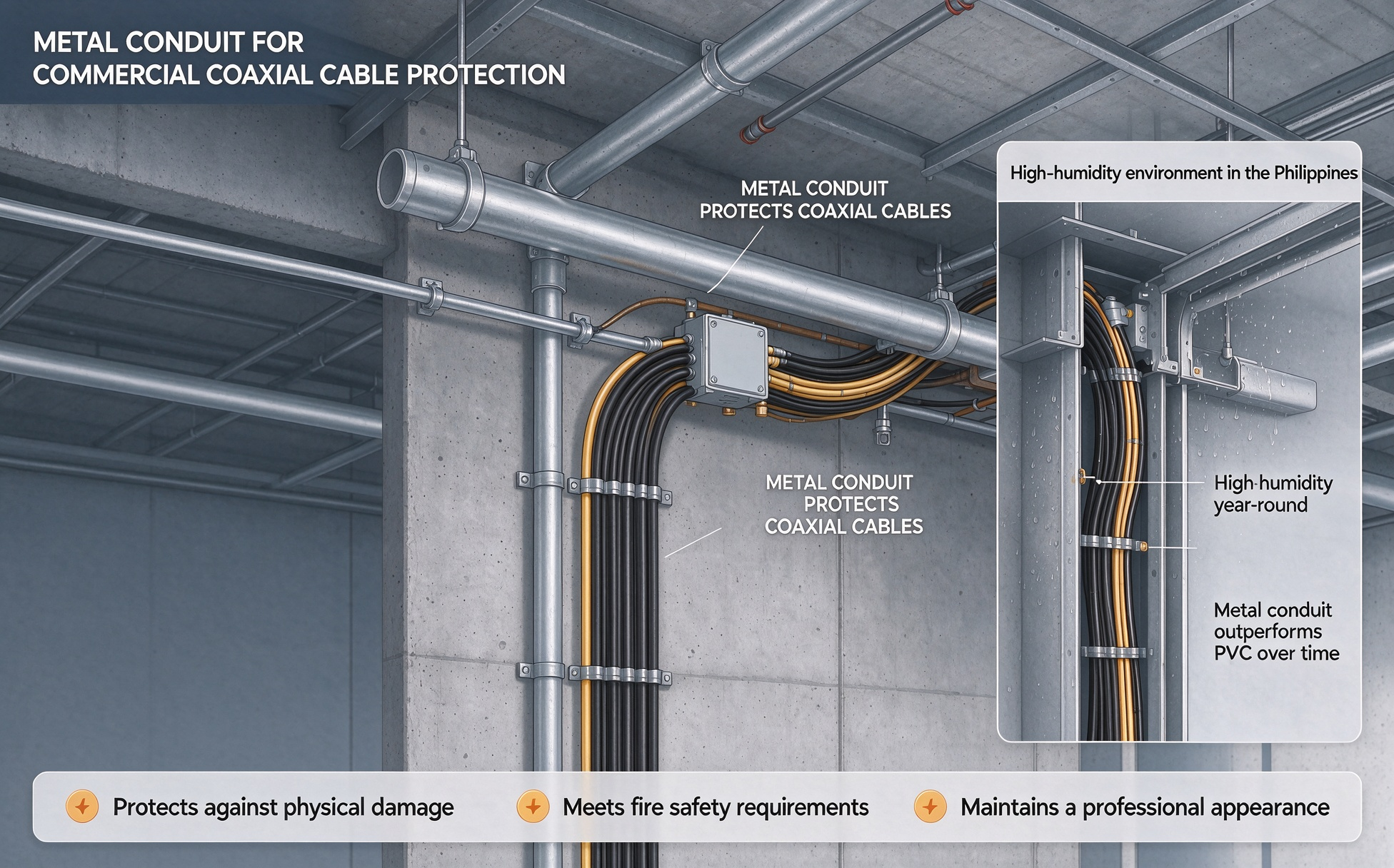
Why metal conduit instead of flexible plastic?
Commercial buildings have fire-rated assemblies, exposed mechanical systems, and long-term durability requirements. Metal conduit protects the coaxial cable from physical damage, meets fire safety expectations, and keeps the installation looking professional. In the Philippines, where humidity is high year-round, it also holds up better than PVC over time.
Step 3: Ceiling Antenna Installation
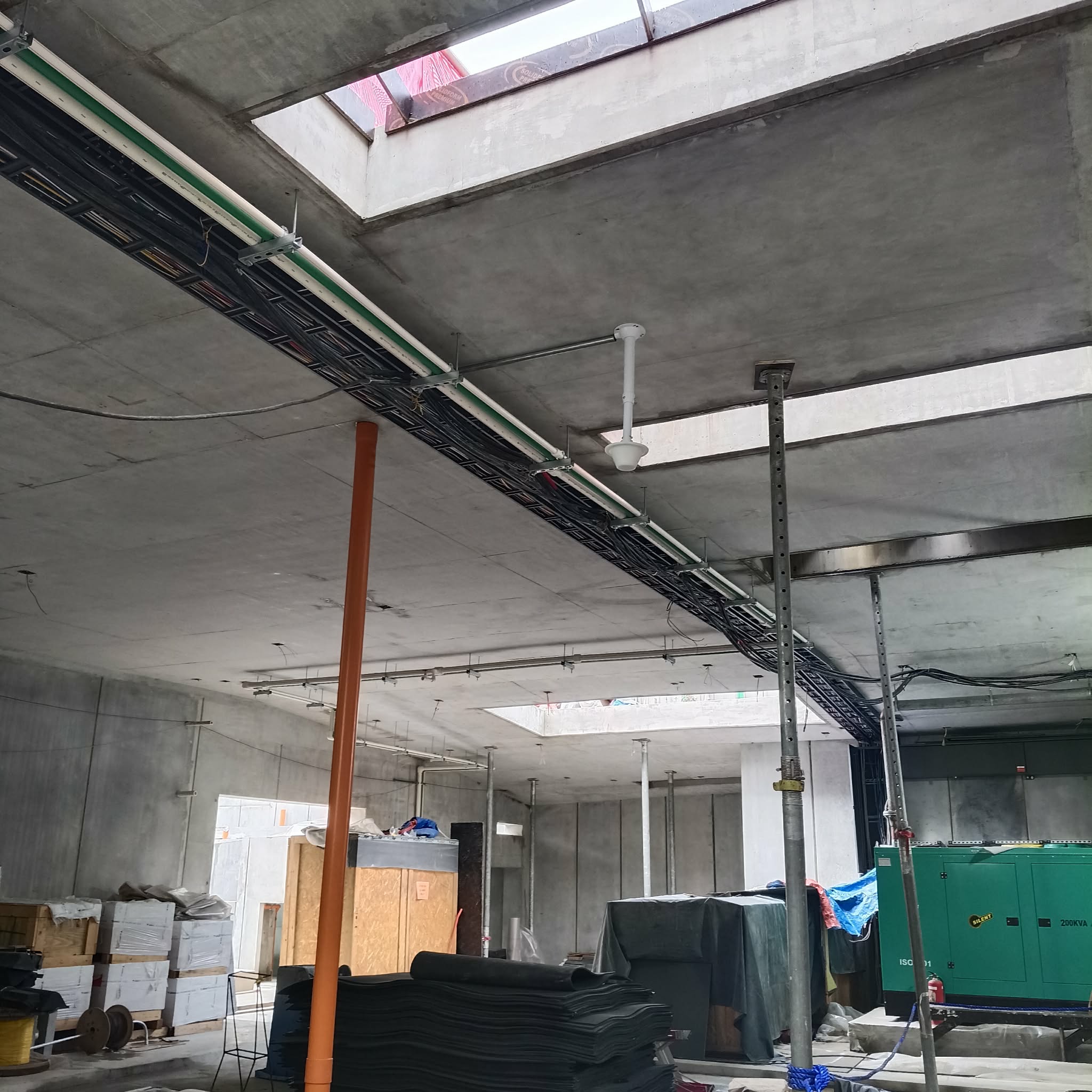
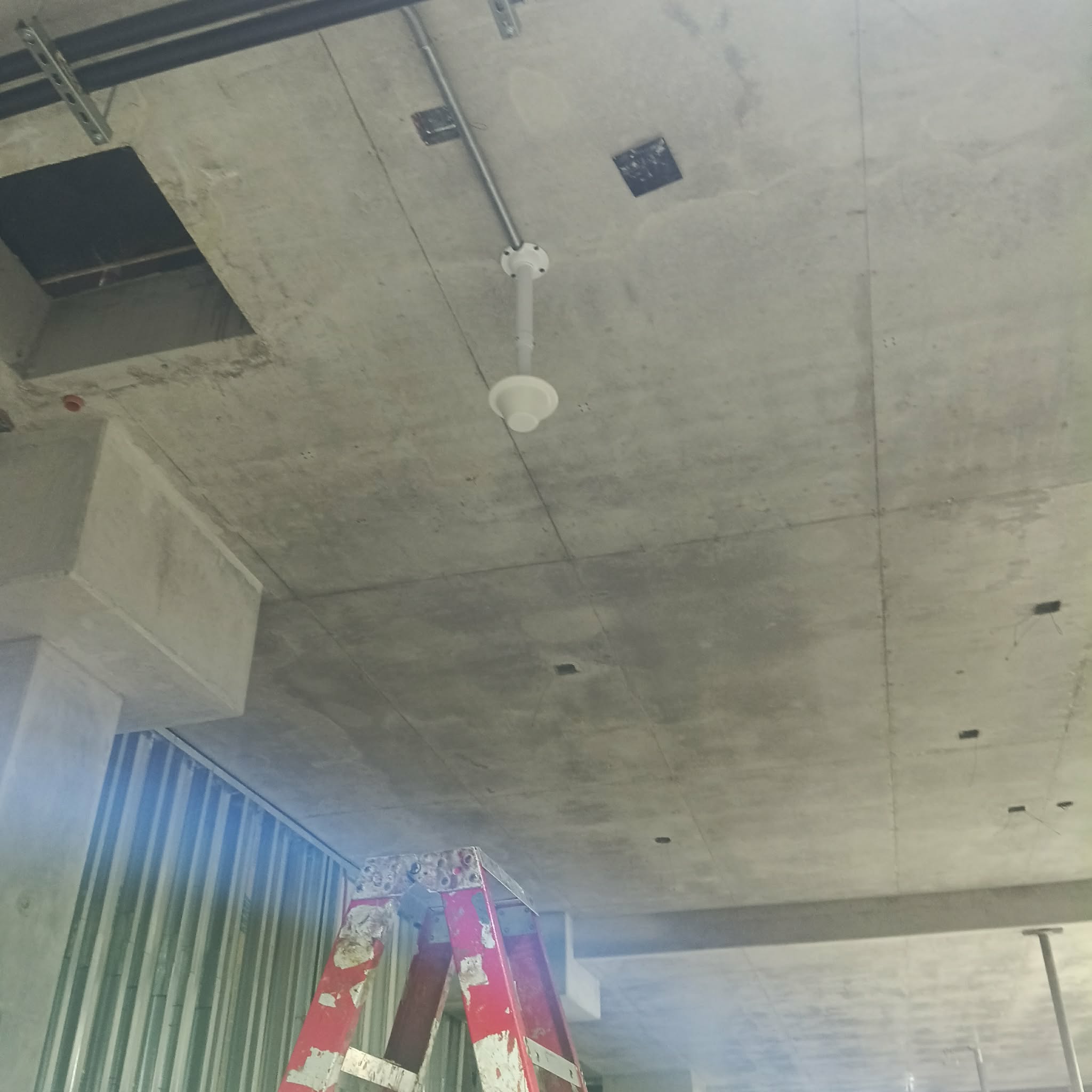
ceiling-mount antennas were installed on drop rods anchored to the concrete slab above. Each antenna covers a defined radius below it, so spacing and height matter.
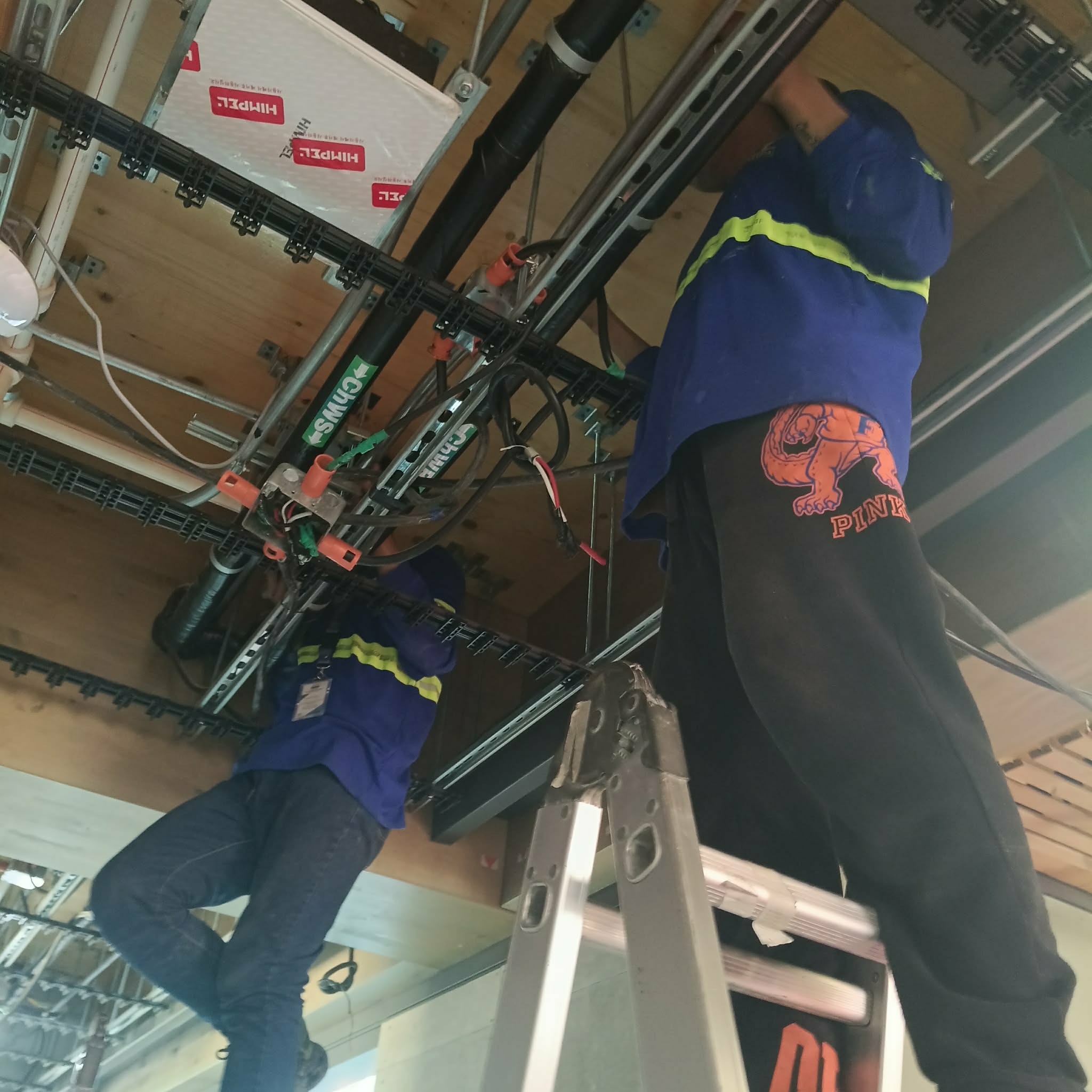
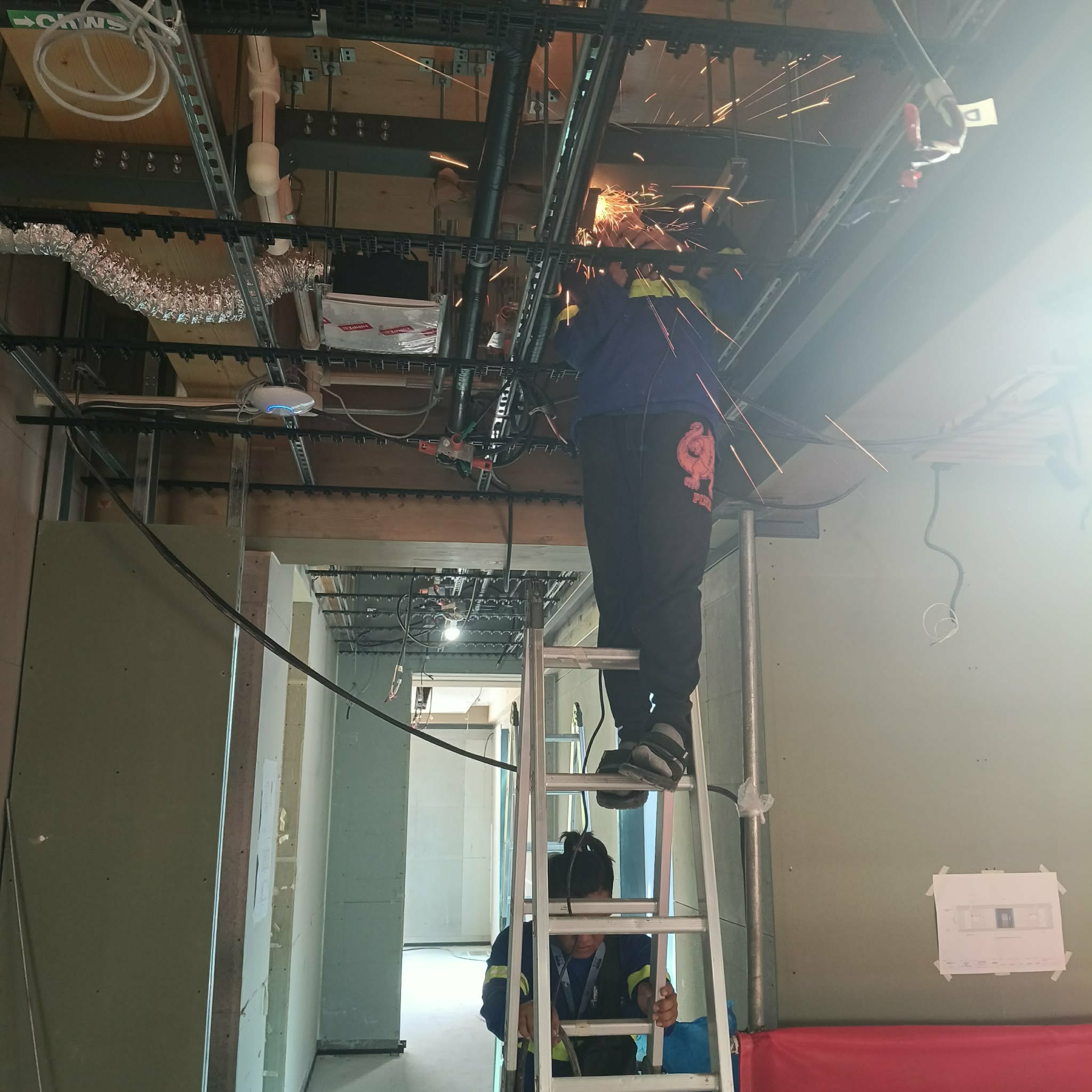
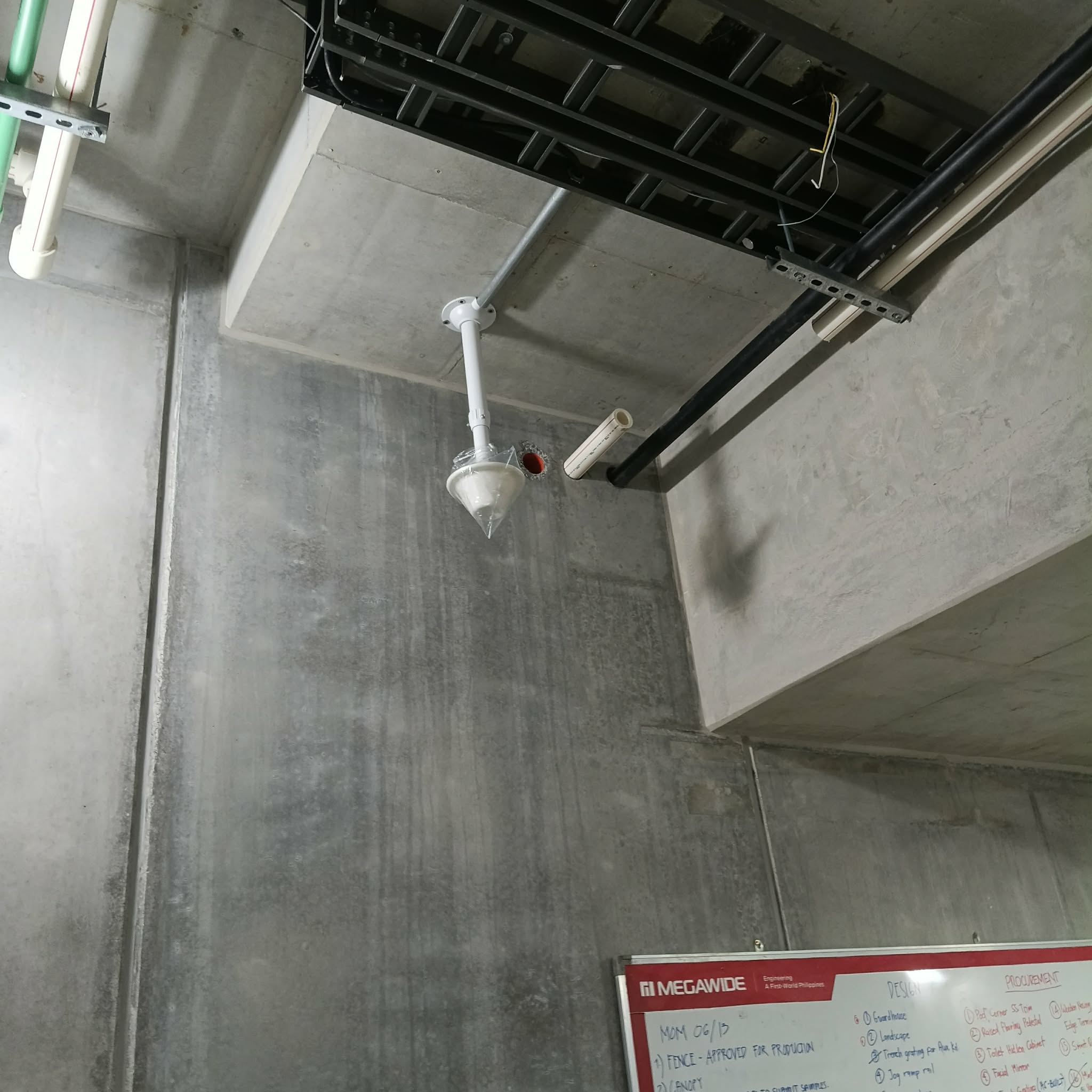
In the photos, the antennas sit below exposed concrete ceilings, connected by conduit back to the cable tray. Once the ceiling finishes go in, only the white antenna dome will be visible. That’s the goal: coverage where you need it, hardware where you don’t see it.
This kind of distributed antenna layout is what turns a single 4G repeater or 4G+5G mobile signal repeater into a usable cellular signal booster system. One host feeds multiple antennas. Each antenna covers its zone. The result is even coverage across the floor instead of a strong hotspot near the booster and weak signal everywhere else.
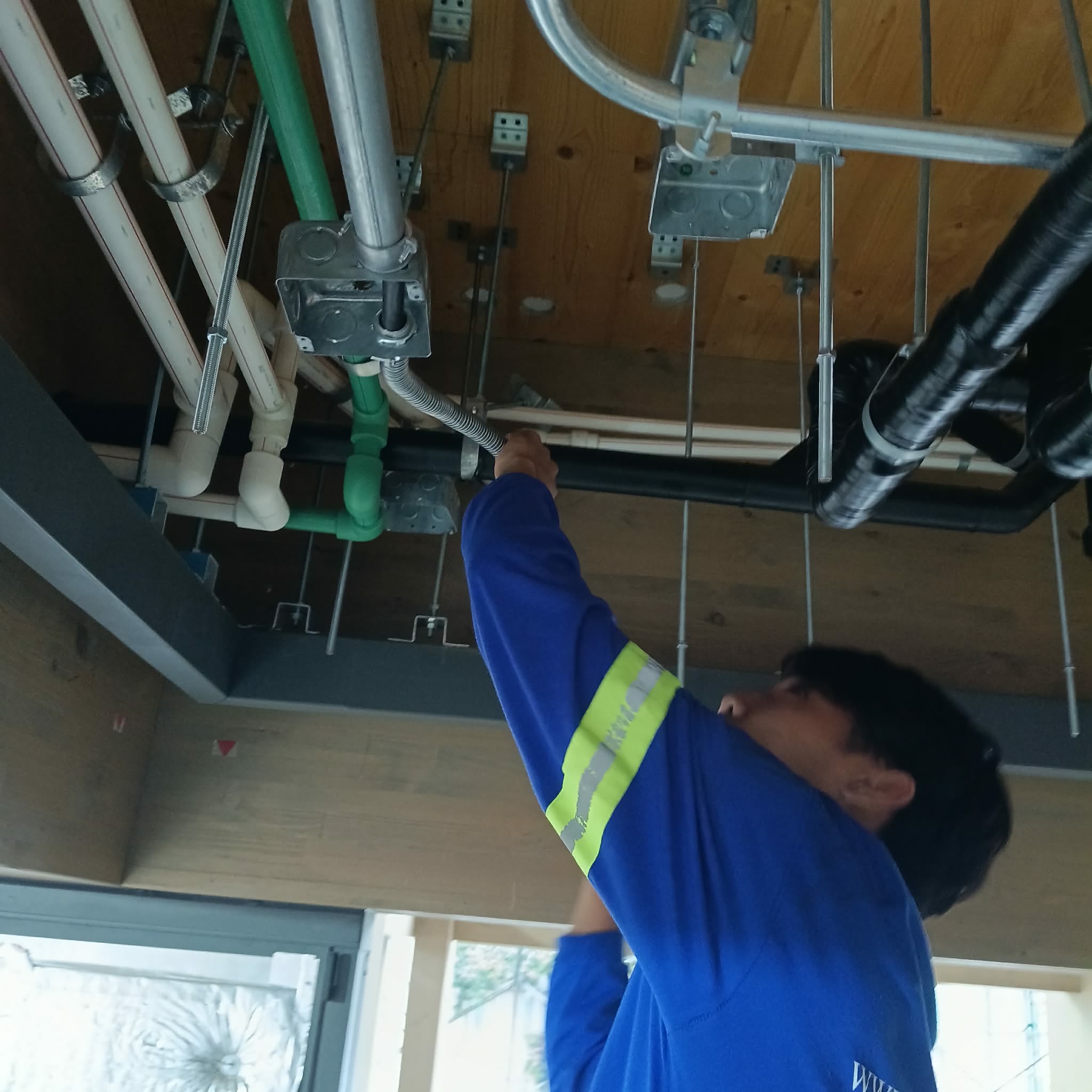
Step 4: Cable Pulling and Equipment Room Setup
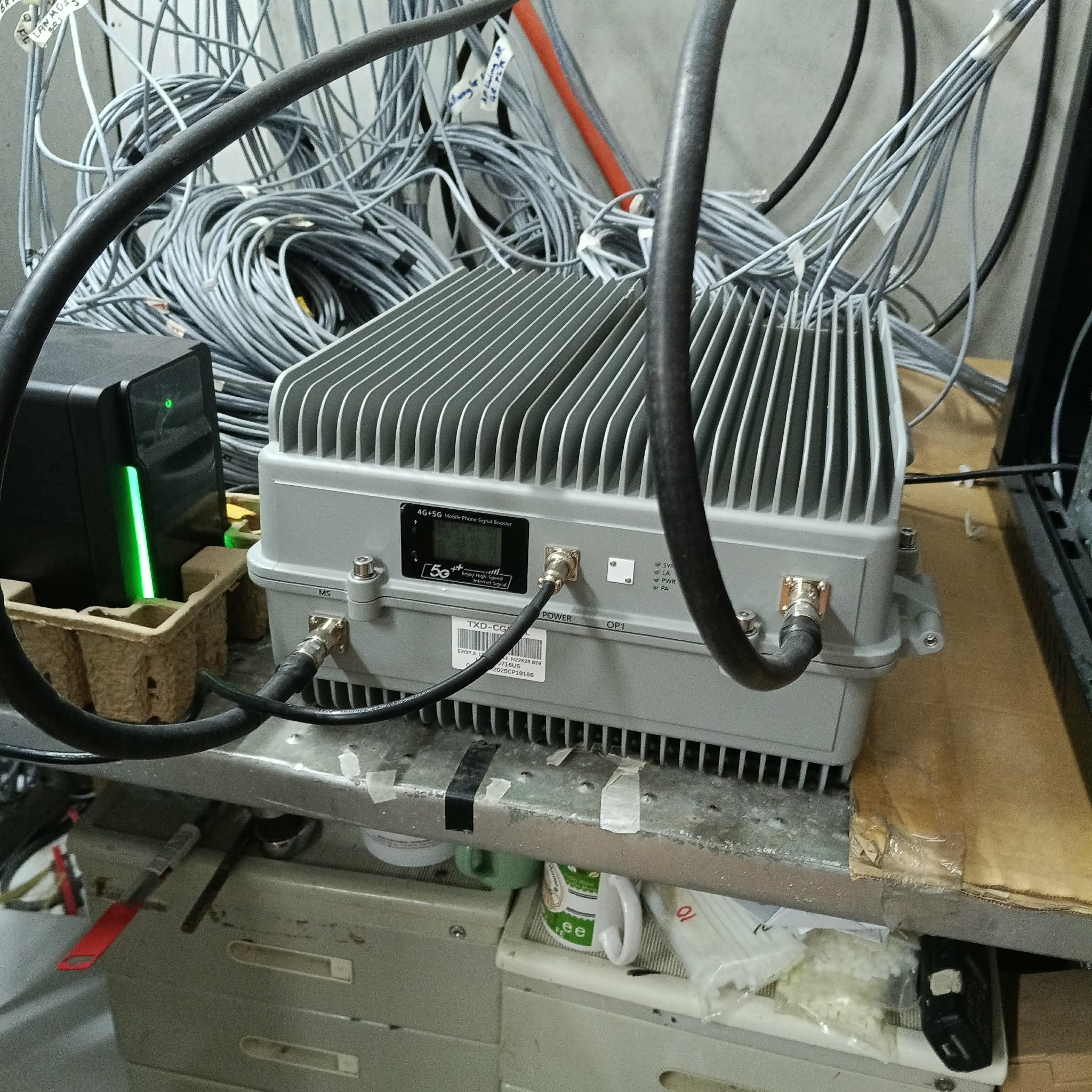
With conduit in place, the team pulled coaxial cable through the runs and dropped lines down to each antenna point. The main feeder cables ran back to the equipment room, where the booster host was installed.
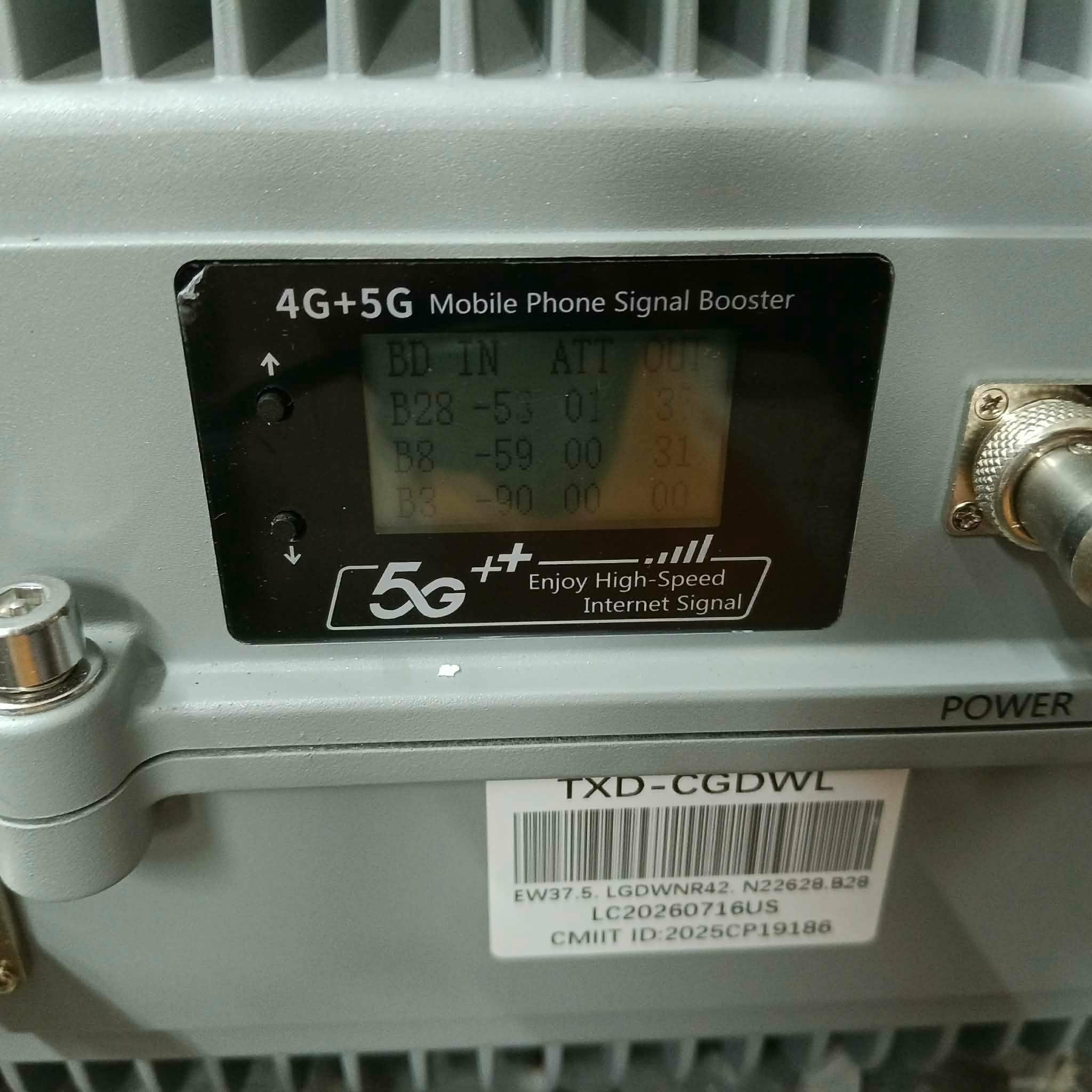
The host unit shown in the project photos is a 4G+5G mobile phone signal repeater — an engineering-grade outdoor-rated unit with a digital display showing band input levels and attenuation settings. In this installation, the display reads bands including B28 (700 MHz), B8 (900 MHz), and B3 (1800 MHz), with input levels around -55 to -90 dBm. That tells the installer exactly what signal the unit is receiving from the donor antenna and whether gain settings need adjustment.
This is the practical side of commissioning that end-users never see. But for installers, it’s the difference between “it powers on” and “it actually works.”
What Made This Project Typical ?
There was nothing unusual about this job — and that’s exactly why it’s useful to look at.
- Tight site coordination. The signal booster team worked alongside electrical, mechanical, and finishing contractors. Their conduit runs had to share ceiling space with cable trays, ducts, and sprinkler lines.
- Renovation timing. Cable and conduit went in while ceilings were open. If this had been done after handover, the cost would have doubled.
- Professional infrastructure. The installation used metal conduit, proper support brackets, and labeled cable runs — not zip-tied coax hanging from trusses.
- Multi-band 4G+5G equipment. The host supports bands common in the Philippines, including B3, B8, and B28, which cover Globe, Smart, and DITO networks. For contractors, this is the kind of band flexibility that lets one system serve all major carriers.
This is the standard we aim for on every commercial deployment. Whether it’s a booster gsm site in Africa, a network booster for a hotel in Southeast Asia, or a power signal booster for a warehouse in Latin America, the fundamentals are the same: plan the layout, protect the cable, distribute the signal, and verify the results.
Lessons for Contractors and Distributors
If you’re quoting or installing commercial signal coverage, here are a few takeaways from this Makati project.
Use renovation windows. The cheapest time to install a cellular signal booster system is when the ceiling is open. If your client is renovating, sell the signal coverage upgrade now, not later.
Specify conduit. Don’t leave it as “contractor’s option.” Metal conduit costs more upfront but eliminates callbacks for damaged cable and failed inspections.
Verify donor signal. The host display in the photos shows input levels per band. That data tells you whether the donor antenna location is good enough. Weak donor signal means you need a higher-gain donor antenna or a more powerful host — not just “turn up the gain.”
Plan antenna density by zone, not just area. A large open office needs fewer antennas than a corridor with private rooms. Coverage radius drops every time a wall gets in the way.
Think beyond 4G. Clients in urban markets are already asking about 5G readiness. Specifying a 4G+5G mobile signal repeater today protects the installation from becoming obsolete in two years.
If you’ve got a commercial project coming up — whether it’s an office renovation, a hotel, a retail space, or even a cell phone booster for rural areas with long-distance backhaul — we can help you spec it.
Send us the floor plan, the building materials, and the carrier bands in your country. Our engineers will come back with a parts list and a coverage design.
Request a customized solution here, or browse our commercial coverage products to see what we build.
Q1: What work should be finished before powering‑on a cellular signal booster system?
A1: Complete site marking, conduit layout, measuring & positioning, cable pulling and cable dropping. All cable pathways must be secured and protected before connecting your power signal booster.
Q2: Why is conduit so important for mobile signal repeater installations?
A2: Conduit protects RF cables from physical harm and moisture, reducing oscillation and intermittent signal faults in long‑term commercial projects.
Q3: Does Lintratek offer full accessories together with 4g repeater units?
A3: Yes. We supply matching antennas, coaxial cables and surge‑protection parts as part of our complete mobile network solution for wholesale clients.
Post time: Nov-20-2026